
Last updated September 10, 2026
Full 25-point door and opener safety check with every visit - springs, cables, rollers, tracks, and your LiftMaster or Chamberlain opener included
You get a price before we start. It does not change when the truck arrives.
 Before
 After
After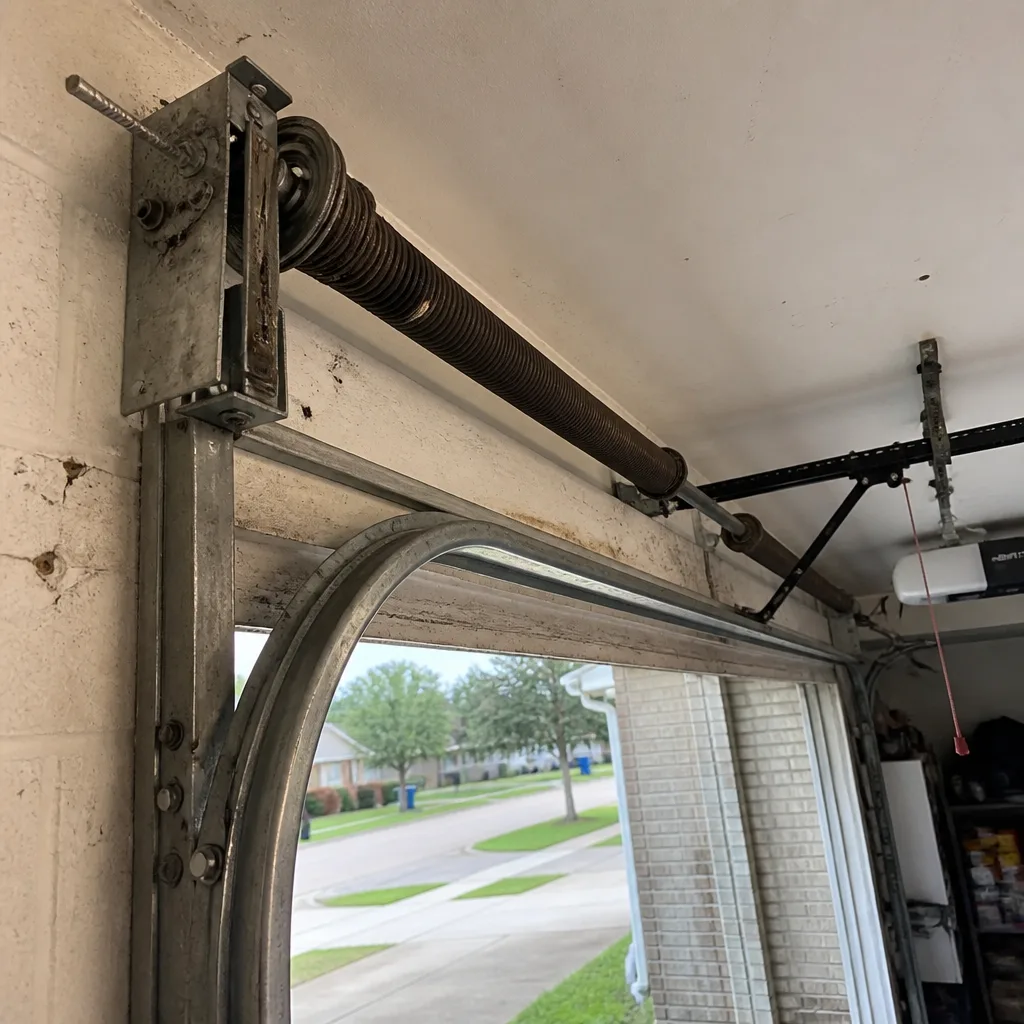 Before
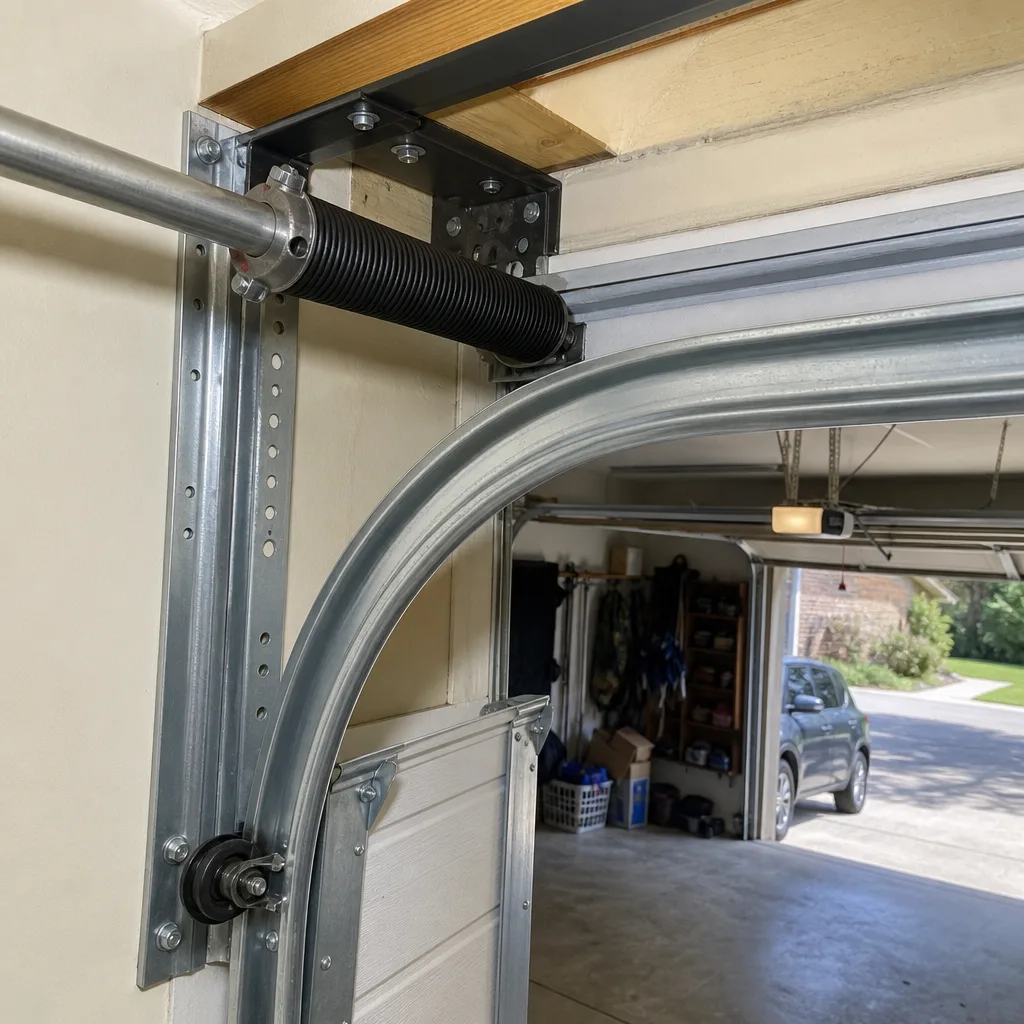 After
After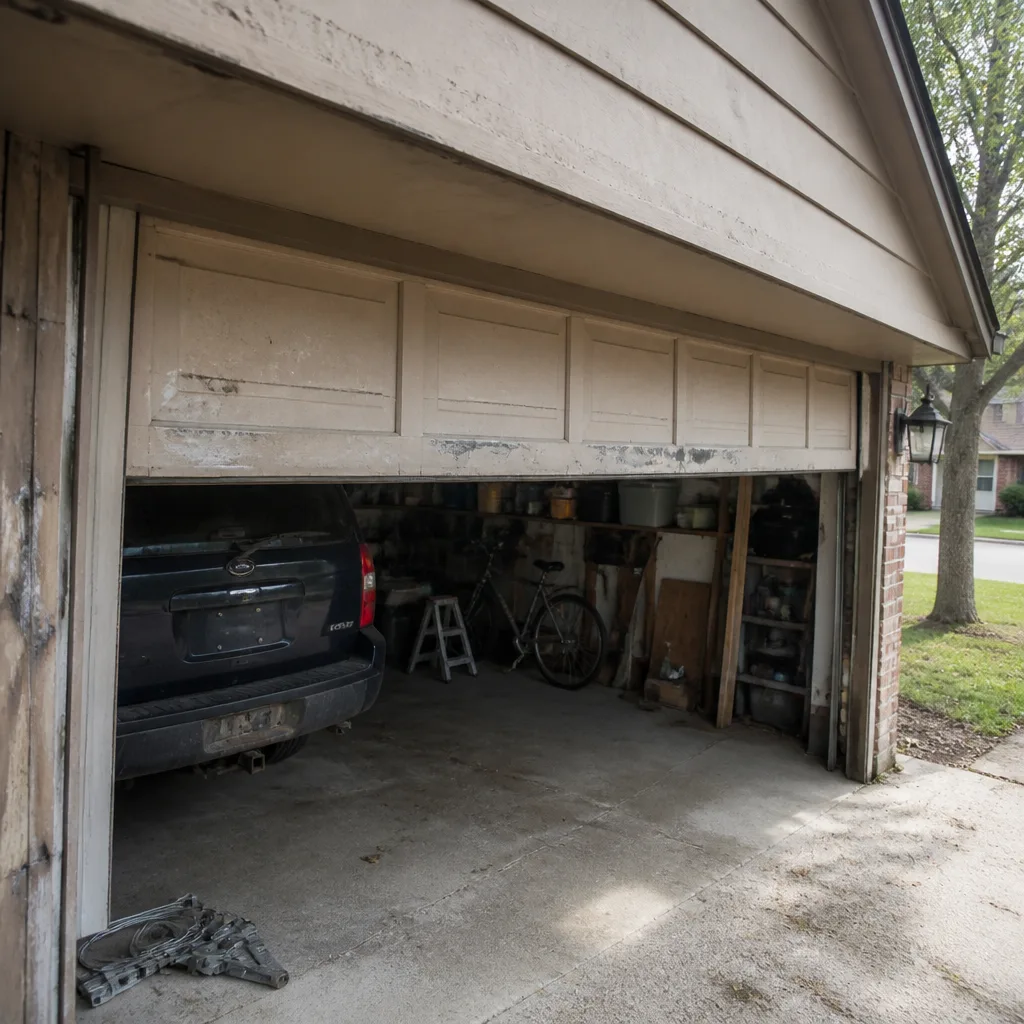 Before
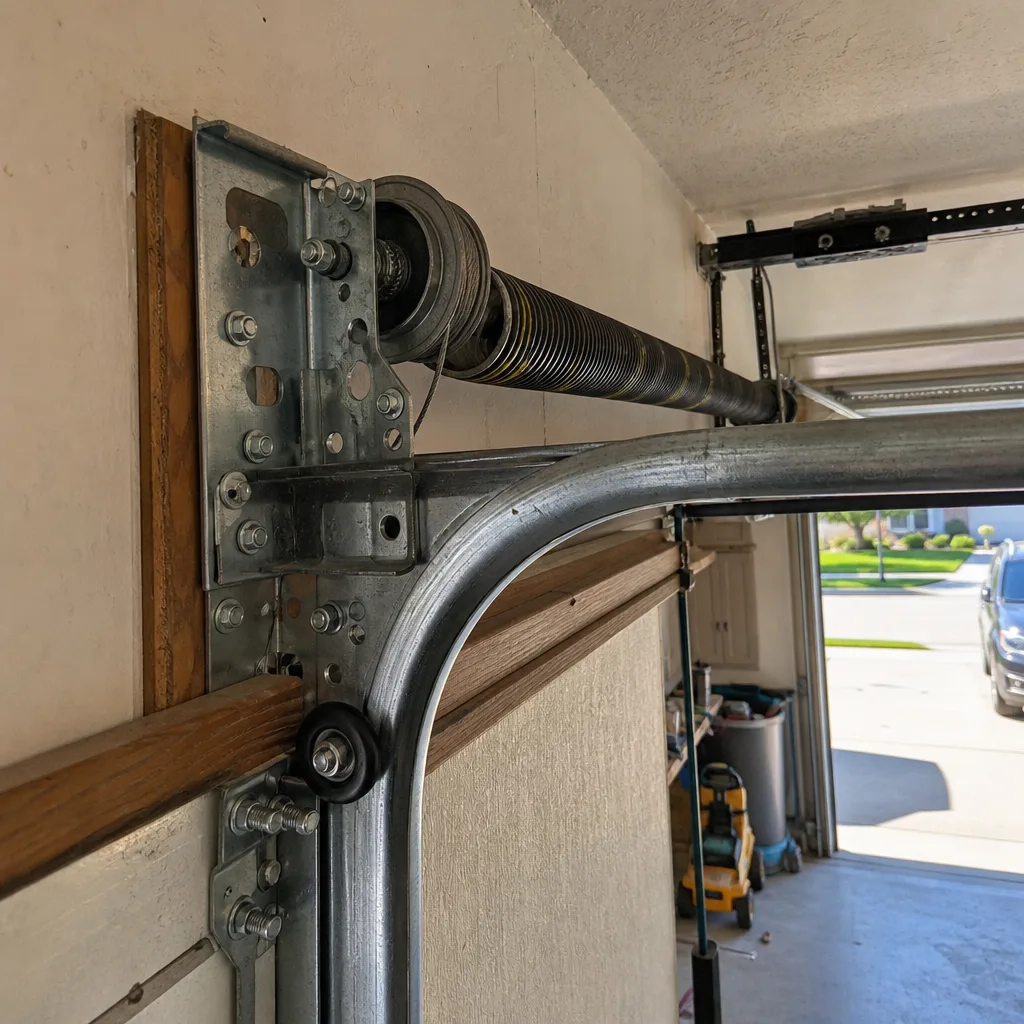 After
AfterSeasonal Garage Door Care for Katy: Year-Round Homeowner’s Guide
In Katy, the most door failures happen in the two weeks after the first cold snap of the year - not because of the cold itself, but because the rapid humidity swing from summer to that first dry front stresses springs and seals that sat tight all summer. We’ve seen it for over four decades: a door that ran fine in August seizes by Thanksgiving, and the homeowner is surprised. This guide - and our The Complete Guide to Garage Door in Katy - is built for Katy’s actual weather calendar: brutal summers, brief unpredictable winters, and two short shoulder periods, not a national template that pretends all four seasons carry equal weight. You’ll learn what to check, when to check it, and why timing matters in the Gulf Coast climate zone.
Quick Answer
Seasonal garage door care in Katy means heavy maintenance before summer heat sets in, storm-prep checks before hurricane season peaks, a critical inspection during the October humidity swing, and freeze-cycle lubrication before the first cold front arrives. Most Katy homeowners who follow this calendar avoid the emergency repair calls that spike after every seasonal change.
Table of Contents
- Why Katy’s Climate Demands a Different Maintenance Calendar
- Late Spring Prep: Before the Heat Locks In
- Summer Survival: UV, Heat, and Opener Strain
- Storm Season: Wind Load, Seals, and Post-Storm Checks
- The Fall Humidity Swing: Katy’s Highest-Risk Window
- Winter Readiness: Mild But Variable
- Building a Maintenance Log That Protects Your Warranty
- Common Mistakes to Avoid
- When to Call a Professional
- Frequently Asked Questions
- The Bottom Line
Why Katy’s Climate Demands a Different Maintenance Calendar
Most garage door maintenance guides assume four equal seasons. That assumption fails in Katy.
Our climate runs on a different rhythm. From June through September, we face sustained temperatures above 95°F with humidity that rarely drops below 70%. Then comes a compressed fall where a single week might swing from 85°F and humid to 45°F and dry. Winter arrives as a series of cold fronts, not a steady season. Spring is brief, stormy, and often cut short by early summer heat.
This pattern creates specific stress points:
- Thermal expansion cycles - Metal tracks and springs expand in summer heat, then contract rapidly in fall cold snaps. The Gulf Coast’s humidity swing accelerates metal fatigue.
- UV degradation - Katy’s 204 days of full sun annually break down rubber seals faster than northern climates where doors see six months of snow cover.
- Opener electronics vulnerability - Garage interiors in uninsulated Katy homes regularly reach 110°F+ in July. Circuit boards in older openers, particularly pre-2018 models, fail at elevated rates.
- Wind-load exposure - Hurricane season brings sustained winds that test door integrity in ways a Kansas thunderstorm does not.
In our experience across Katy subdivisions from Cinco Ranch to Old Katy, doors that receive attention before these stress windows last 40% longer between major repairs. The calendar below is organized around the actual risks, not the calendar quarters.
Late Spring Prep: Before the Heat Locks In
By mid-May in Katy, the pattern is set. The next reliable cool day is October. Late spring is your last comfortable window to address problems that become emergency calls in July.
What to Check in Late April Through Mid-May
- Inspect weather seals for UV pre-damage. Look for cracking, hardening, or compression set in the bottom seal and side seals. In Katy’s sun, rubber begins losing flexibility before visible cracks appear. Pinch the seal - if it doesn’t spring back, it’s already compromised. A compromised seal in May becomes a failed seal by August, and that gap lets 110°F air and garage pests into your space.
- Test door balance with the opener disconnected. Pull the red release cord and lift the door manually to waist height. A properly balanced door stays put. If it drifts up or down, the spring tension is off. In Katy’s coming heat, an unbalanced door overworks the opener motor daily. This is also the moment to note whether the door feels heavier than last year - spring fatigue accelerates in high-humidity environments.
- Verify opener thermal protection. Older openers, especially chain-drive units mounted directly against the garage ceiling, run hot in summer. Check the manufacturer’s temperature rating. If your opener is pre-2015 and lacks thermal overload protection, consider whether it’s time to discuss replacement before peak heat. Garage Door Opener in Katy options now include units with active thermal monitoring.
- Lubricate all moving parts with silicone-based lubricant. Avoid WD-40 - it attracts dust and gums up in humidity. Apply silicone spray to rollers, hinges, and bearing plates. In Katy’s climate, this single step prevents the corrosion that seizes doors when fall humidity drops.
- Check insulation integrity. If your door has polystyrene or polyurethane insulation, look for panel separation or delamination. Summer heat in an attached garage transfers directly into your home’s envelope. In Katy, a failed insulated door can raise adjacent room temperatures by 8-12°F.
This is also the ideal window for our Mainspring Garage Door Co. home seasonal tune-up. The $89 service includes balance testing, seal inspection, safety sensor alignment, and full lubrication - completed in one visit, with the flat price stated before we start.
Summer Survival: UV, Heat, and Opener Strain
Katy summers don’t just stress your door - they punish it. From June through September, your garage door system faces conditions that simply don’t exist in most of the country.
The UV Problem
Katy receives more annual UV radiation than Miami. That radiation degrades:
- Bottom seals: Nitrile rubber hardens and cracks. We’ve replaced seals in Katy homes that were installed 18 months prior and already failed.
- Weatherstripping on wood doors: The material shrinks, creating gaps that let conditioned air escape and hot air enter.
- Plastic components: Nylon rollers degrade faster; photo-eye housings become brittle.
Check seals monthly in summer. The test is simple: close the door on a bright day and look for light penetration. Any visible line is a gap that will grow.
Opener Heat Tolerance
Garage interior temperatures in Katy regularly reach 110-120°F in July. Openers mounted against the ceiling, where hot air concentrates, are most vulnerable.
Signs of heat stress:
- Opener stops mid-cycle and resumes after cooling
- Remote range decreases as the logic board struggles
- Intermittent operation that clears by evening
If your opener shows these patterns, it’s not a ghost - it’s thermal overload. Modern units from LiftMaster and Chamberlain include thermal monitoring that reduces motor current before damage occurs. If your opener is more than 10 years old, summer is when it will tell you its limits.
Door Surface Temperature
A dark-colored steel door in direct Katy sun can reach 160°F surface temperature. That heat transfers to the interior, warms the torsion spring (slightly reducing its effective tension), and accelerates lubricant breakdown. Light-colored or reflective doors run 30-40°F cooler. If you’re considering Garage Door Installation in Katy, surface color is not just aesthetic - it’s a thermal performance decision.
Summer Maintenance Tasks
- Re-lubricate if the door sounds dry or rough - summer heat evaporates lighter lubricants faster than expected.
- Keep the garage ventilated if possible. Even a small temperature reduction extends opener life.
- Test safety reverse monthly. Heat-expanded components can alter sensor alignment.
- Inspect cables for fraying. Heat-cycled metal fatigues faster; cable failures in Katy peak in August and September.
Storm Season: Wind Load, Seals, and Post-Storm Checks
Hurricane season runs June through November, but the peak threat window for Katy is August through October. Your garage door is the largest opening in your home’s envelope, and if it fails, internal pressure can damage the roof structure.
Wind-Load Verification
Katy sits in a wind zone that requires doors to meet specific pressure ratings. If your home was built after 2006, your door likely has a wind-load sticker on the interior track. Check it. The rating should match or exceed the design wind speed for your specific Katy address - requirements vary between Cinco Ranch (typically 120 mph) and areas closer to the reservoir.
If your door lacks a wind-load label, or if the label is for a lower rating than current code, the door may not be code-compliant. This matters for insurance claims after a named storm. We verify wind-load ratings on every Garage Door Repair in Katy call - it’s part of assessing whether a repair or replacement serves you better.
Pre-Storm Seal Check
A compromised bottom seal becomes a water entry point in driving rain. In Katy’s flat terrain, water sheets across driveways and pools at garage thresholds. Test your seal: close the door on a piece of paper and try to pull it through. If it slides freely, the seal is not making contact.
What to Check After Any Named Storm Passes
- Track alignment. Wind pressure can shift tracks microscopically. Operate the door and listen for grinding or binding.
- Spring tension. Rapid pressure changes stress the spring system. A door that suddenly feels heavier indicates spring fatigue.
- Photo-eye alignment. Debris or vibration can knock sensors out of position. The door should reverse immediately when the beam is interrupted.
- Panel damage. Even small dents from wind-borne debris can compromise door balance and weather sealing.
- Opener function after power restoration. Surges when grid power returns can damage logic boards. If the opener behaves erratically, have it assessed before the next storm cycle.
In our 42 years, we’ve responded after every major Gulf Coast storm. The calls that come in 48 hours after landfall are almost always from homeowners who skipped the post-storm check. The calls that come in two weeks later are from those who didn’t know to check.
The Fall Humidity Swing: Katy’s Highest-Risk Window
This is the section most maintenance guides miss entirely. It is also the most important.
Every year in Katy, typically between mid-October and mid-November, the first strong cold front arrives. Humidity drops from 75% to 35% in 48 hours. Temperatures fall 30-40 degrees. And garage door systems that functioned through summer begin failing in clusters.
Why This Window Destroys Springs and Cables
Garage door springs are under constant tension. In Katy’s humid summer, moisture microscopically penetrates the metal surface. When the fall dry front arrives, that moisture evaporates rapidly. The surface contracts. Micro-cracks that formed during summer heat cycling now propagate under the stress of rapid dimensional change.
We’ve tracked our call volume in Katy for decades. Spring and cable failures spike 200-400% in the two weeks following the first sustained dry front. The door didn’t fail because of the cold. It failed because the humidity swing exposed damage that accumulated all summer.
What to Do in Early October, Before the Swing
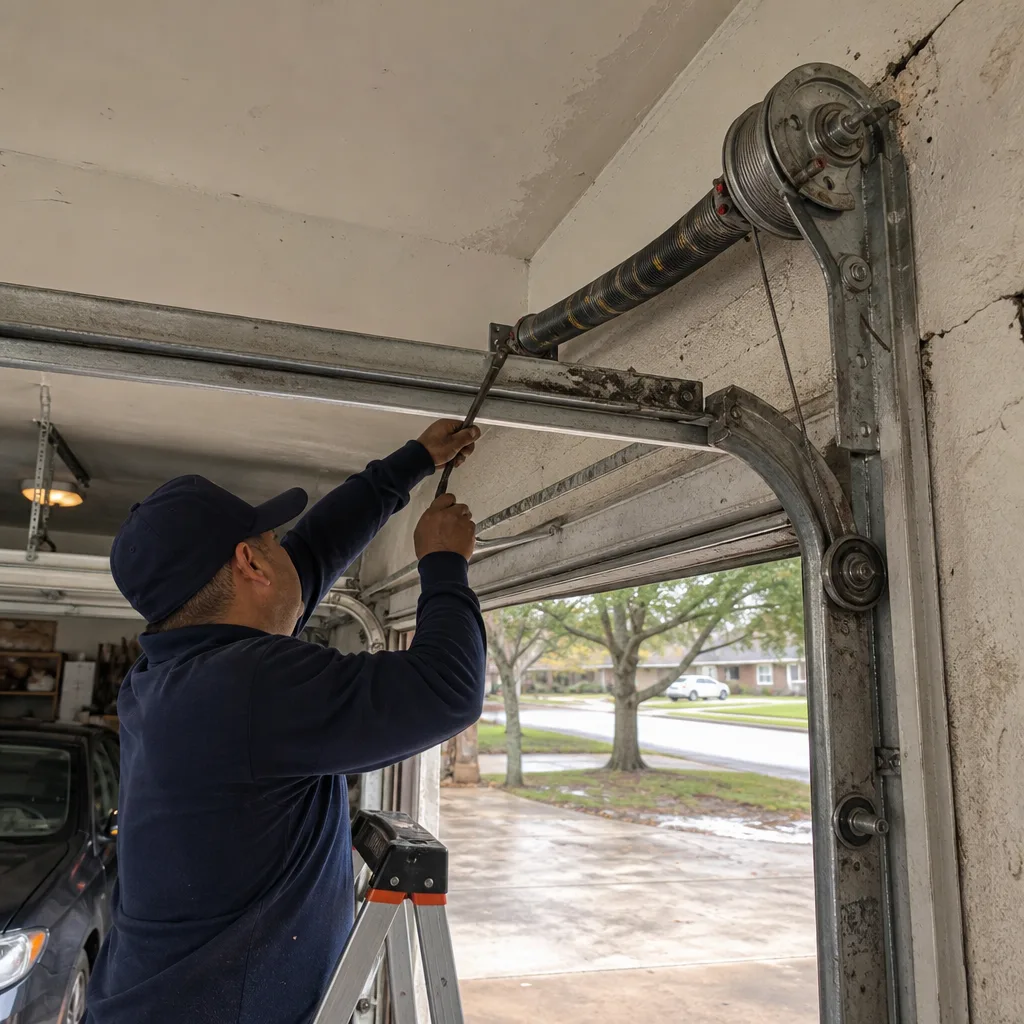
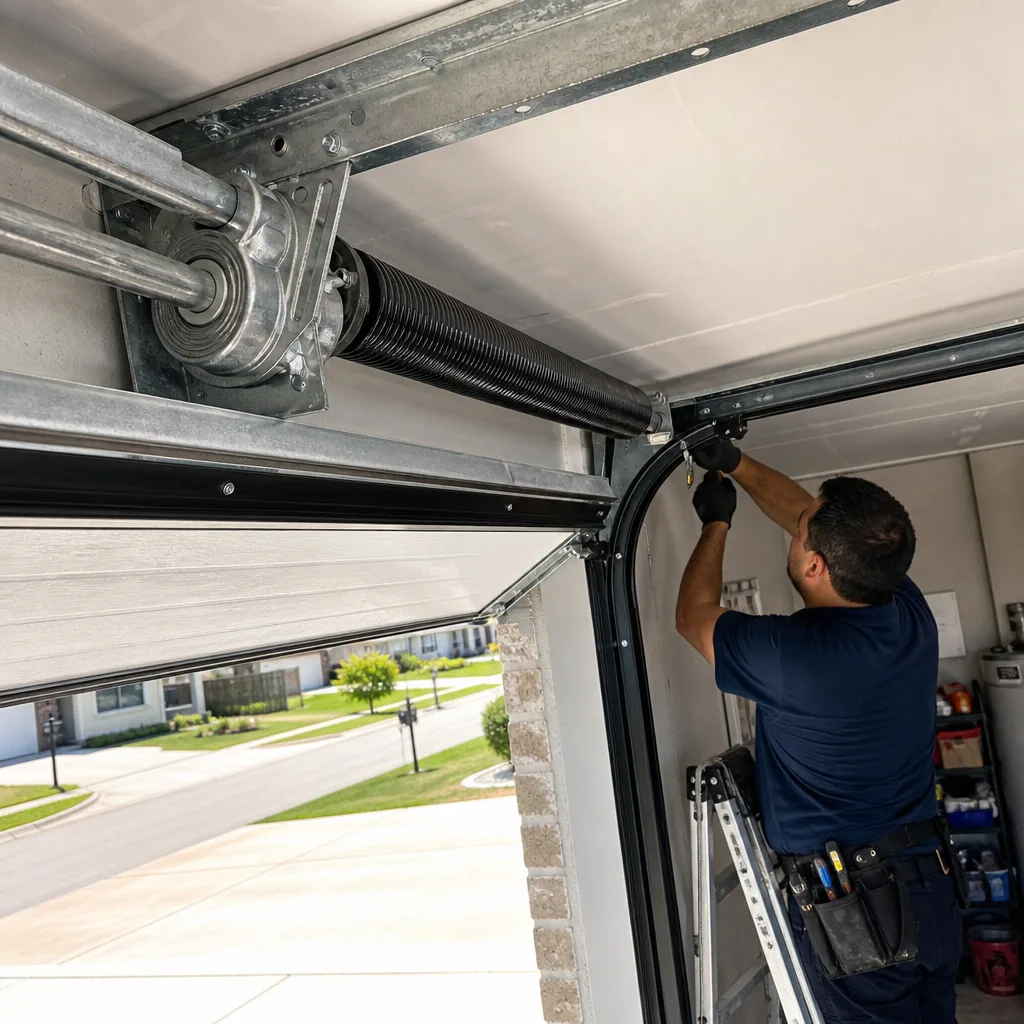
- Inspect springs for rust bloom or flaking. Surface corrosion indicates the metal has been cycling through moisture changes. A spring with visible rust has reduced cycle life remaining.
- Check cables for fraying or kinking. Cables that have been running slightly misaligned all summer develop wear patterns that the fall contraction turns into failure points.
- Test door balance again. Compare to your spring test. If the door has drifted further from balanced, the spring has fatigued through summer and is approaching its limit.
- Listen for new noises. A creak or pop that wasn’t there in September is often the sound of metal stress redistributing. It is not “settling.” It is a warning.
- Schedule professional inspection if the door is over 8 years old. In Katy’s climate, torsion springs have a functional life of 7-12 years depending on cycle count and humidity exposure. If you’re in that window, proactive replacement before the swing beats emergency replacement after it.
This is not speculative. In the fall of 2023, we replaced 34 spring systems in Katy in a 10-day period after the first front - nearly triple our normal rate. Most of those homeowners reported the door had been “a little noisy” since August.
Safety note: Garage door springs are under extreme tension and can cause serious injury or death if handled improperly. Never attempt to adjust or replace a torsion spring yourself. The force stored in a standard residential spring is sufficient to break bones. Our technicians are trained as journeymen under the K.E.Y.S. values code and handle this work with proper tools and safety protocols.
Winter Readiness: Mild But Variable
Katy winters are not harsh by national standards, but they are unpredictable. A January week might range from 75°F to 28°F. Those freeze-thaw cycles create specific maintenance needs that a steady cold climate does not.
Freeze-Cycle Lubrication
Standard lubricants thicken in cold temperatures, increasing motor load and wear. Before the first reliable freeze (typically mid-December in Katy), switch to low-temperature lubricant on:
- Roller bearings
- Hinge pins
- Torsion spring coils (light coating to prevent moisture retention)
- Locking mechanisms on manual doors
Apply sparingly. Excess lubricant attracts dust that becomes abrasive grit.
Electronics in Cold Snaps
Garage door openers contain capacitors and circuit boards that behave differently below 40°F. Symptoms of cold-affected electronics include:
- Slower door travel speed
- Remote inconsistency (works from inside the car but not from the driveway)
- Wall button lag
These issues typically resolve as temperatures rise. If they persist above 50°F, the component is failing, not just cold-affected. Genie and newer LiftMaster units include cold-weather startup routines that reduce capacitor strain. Older units do not.
Concrete and Threshold Sealing
Katy’s clay soils expand and contract with moisture changes. In winter, occasional hard freezes cause frost heave at garage thresholds where water has penetrated cracks. Inspect the concrete approach for cracking, and ensure your bottom seal maintains contact across the full width. A gap at the threshold becomes a water entry point that worsens with each freeze cycle.
Winter Task List
- Switch to low-temp lubricant before mid-December
- Test battery backup if your opener has one - cold reduces battery capacity
- Verify weather seal contact across full door width
- Inspect threshold concrete for new cracks
- Run the door manually once to feel for binding that temperature change may have introduced
Building a Maintenance Log That Protects Your Warranty
A maintenance log serves two purposes: it extends your door’s life by creating accountability, and it protects your rights under any recent repair warranty.
Mainspring’s 90-Day Done Right Promise covers every completed job in writing. If we repair your door in September and a related issue develops in November, the warranty applies. But warranty coverage requires that the system has not been neglected or altered. A maintenance log documents that care.
What to Record
- Date of each seasonal inspection
- Specific observations (seal condition, balance test result, noise notes)
- Any professional service, with company name and invoice number
- Parts replaced, with date and brand
- Weather events that may have stressed the system (named storms, extreme heat days, hard freezes)
How to Structure It
A simple notebook works. Divide it by calendar year, with entries for each seasonal check. Photograph seals and springs annually for visual comparison. If you ever need warranty service, this documentation establishes the maintenance history that supports your claim.
For homeowners who prefer digital records, a dated email to yourself with photos attached creates a timestamped archive. The format matters less than the consistency.
We recommend tying your log to our $89 Seasonal Tune-Up. The technician’s written report becomes part of your documentation, and any issues found are addressed before they become warranty disputes.
Common Mistakes to Avoid
- Using WD-40 as a lubricant. It is a solvent, not a lubricant. In Katy’s humidity, it attracts dust that forms abrasive paste on rollers and tracks. Use silicone-based garage door lubricant only.
- Ignoring the door until it breaks. In Katy, the cost difference between preventive spring replacement ($180-$340, scheduled) and emergency replacement after failure ($280-$450, often after hours) is substantial. The door also tells you before it fails - if you’re listening.
- Power-washing the door and components. High-pressure water forces moisture into bearings, electrical housings, and between panel sections. In Katy’s humidity, that trapped moisture accelerates corrosion. Use a damp cloth and mild detergent on the door exterior only.
- Adjusting spring tension yourself. This bears repeating. Torsion springs store lethal energy. The winding bars required for safe adjustment are not household tools. Every year, emergency rooms in the Houston-Katy area treat injuries from DIY spring work. The money saved is not worth the risk.
- Assuming all openers handle heat equally. Older chain-drive openers without thermal protection fail at elevated rates in Katy garages. If your opener is pre-2015 and mounted against the ceiling, it is operating near its thermal limit every July afternoon.
- Neglecting the post-storm check. After a named storm, homeowners check roofs and fences. They rarely check garage door track alignment or spring tension. The damage from wind pressure is often invisible until the door fails two weeks later.
- Waiting for a “convenient time” to schedule maintenance. In Katy’s climate, the convenient time is early October - before the humidity swing. By late October, we’re scheduling two weeks out and emergency calls are backing up the calendar.
When to Call a Professional
Some maintenance is homeowner work. Some is not. Call a trained technician when you encounter:
- Any issue with springs, cables, or counterbalance systems
- Doors that have come off their tracks
- Opener problems that persist after basic troubleshooting
- Visible panel damage or structural concerns
- Doors that reverse unexpectedly or fail safety tests
- Any condition that appeared after a named storm
Carl Dutton and the team at Mainspring Garage Door Co. offer free estimates in Katy. For more guides & resources, visit our blog. We’ve served this area since 1984, and our trucks carry the springs, cables, and openers needed for most jobs in a single visit. Call (281) 205-0555 to schedule. The price is stated upfront, before any work begins. Our 90-Day Done Right Promise covers every job in writing.
Frequently Asked Questions
In Katy’s climate, a professional tune-up once per year is the minimum, with homeowner visual checks each season. We recommend the professional service in early October, before the fall humidity swing that causes most failures. Our $89 Seasonal Tune-Up includes balance testing, seal inspection, safety check, and full lubrication - see our Garage Door Cost Breakdown: The Katy Homeowner’s Reference for 2026 for full pricing context. Call (281) 205-0555 to schedule.
The rapid humidity drop from summer levels to dry front conditions causes microscopic contraction in springs and cables that have accumulated fatigue all season. The cold itself is not the primary cause - the moisture change is. This is why we emphasize pre-fall inspection; the damage is visible before the snap arrives.
Homeowners can apply silicone-based lubricant to rollers, hinges, and the lock mechanism. Do not lubricate the track itself - it should remain clean and dry. Never attempt to lubricate or adjust the torsion spring system. The spring is under lethal tension and requires specialized tools and training. If you’re uncertain which components are safe to touch, schedule our tune-up and we’ll show you during the visit.
Standard torsion springs in Katy’s humidity typically last 7-12 years, depending on daily cycle count and exposure conditions. Springs in well-maintained systems with regular lubrication and balanced doors approach the longer end. Springs in neglected systems, or those exposed to garage moisture, often fail earlier. We assess spring condition during every service call and can estimate remaining cycle life.
Yes. Katy falls within a wind zone that requires rated doors for new construction and replacement. If your home was built after 2006, check for a wind-load sticker on the interior track. If your door lacks one, or if you’re unsure of your specific requirement, we verify this during our free estimate. Wind-load requirements vary by exact location within Katy.
Operate the door and listen for grinding or binding that indicates track shift. Test the balance with the opener disconnected. Verify photo-eye alignment by interrupting the beam - the door should reverse immediately. Inspect panels for denting or separation. Check opener function after power restoration; electrical surges can damage logic boards. Any anomaly warrants professional assessment before the next weather event.
No. At Mainspring Garage Door Co., the flat price is stated before any work begins. If our technician identifies additional issues during inspection, we explain them and provide a separate quote. You approve every dollar before we proceed. There are no surprises on the bill. This is how we’ve operated for 42 years.
The Bottom Line
Katy’s garage doors face a climate that national maintenance advice does not address. The brutal summer degrades seals and overheats electronics. Hurricane season tests structural integrity. The fall humidity swing destroys springs that seemed fine in September. And mild-but-variable winters create freeze-thaw cycles that seize neglected components.
The homeowners who avoid emergency repairs follow a calendar keyed to these actual risks: spring prep before heat locks in, storm checks before peak season, critical inspection before the October humidity swing, and freeze-ready lubrication before the first front. They keep a log. They address warnings before they become failures.
We’ve been doing this work in Katy since 1984. The patterns are consistent. The doors that receive timely attention last longer, run quieter, and never strand a homeowner at 6 AM on a workday. The ones that don’t tell you their condition every time you operate them - if you’re willing to listen.
Written by Carl Dutton, Owner at Mainspring Garage Door Co., serving Katy since 2016.