
Last updated September 10, 2026
Full 25-point door and opener safety check with every visit - springs, cables, rollers, tracks, and your LiftMaster or Chamberlain opener included
You get a price before we start. It does not change when the truck arrives.
 Before
 After
After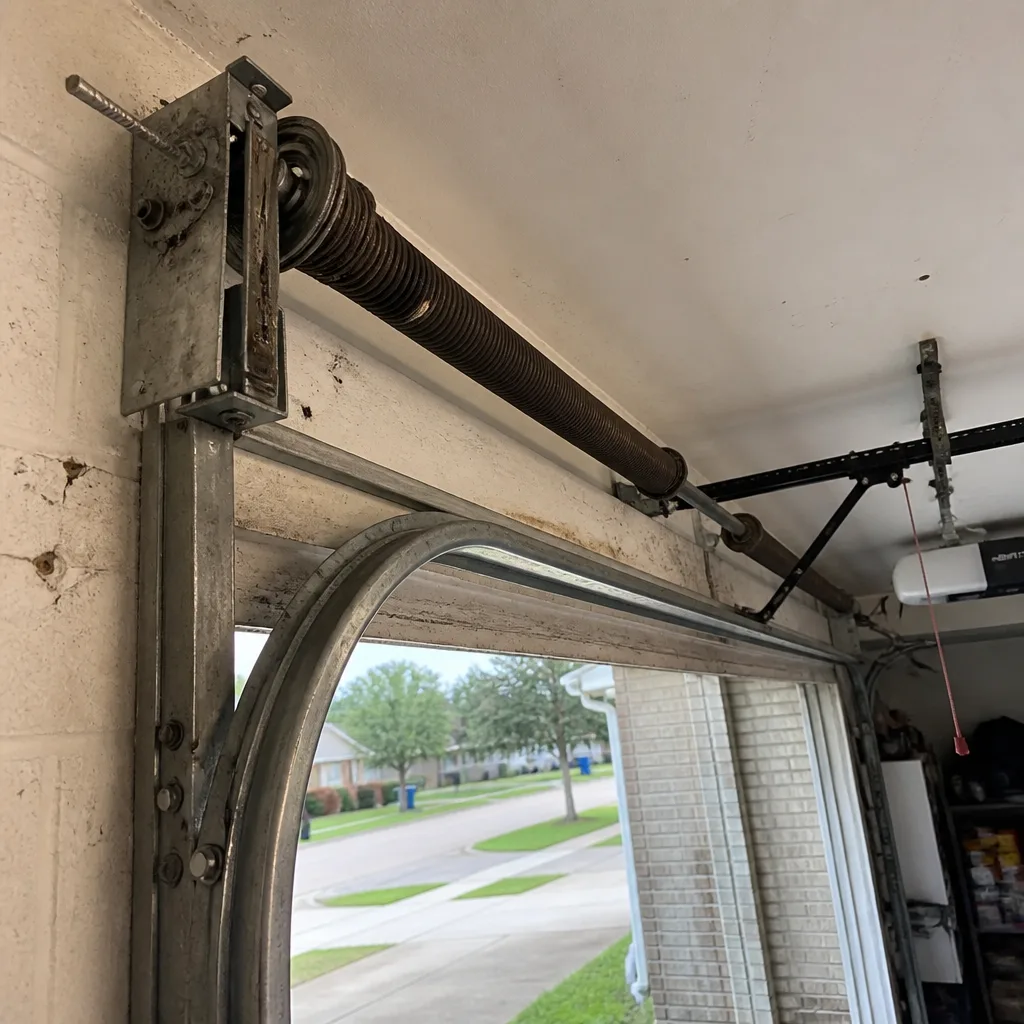 Before
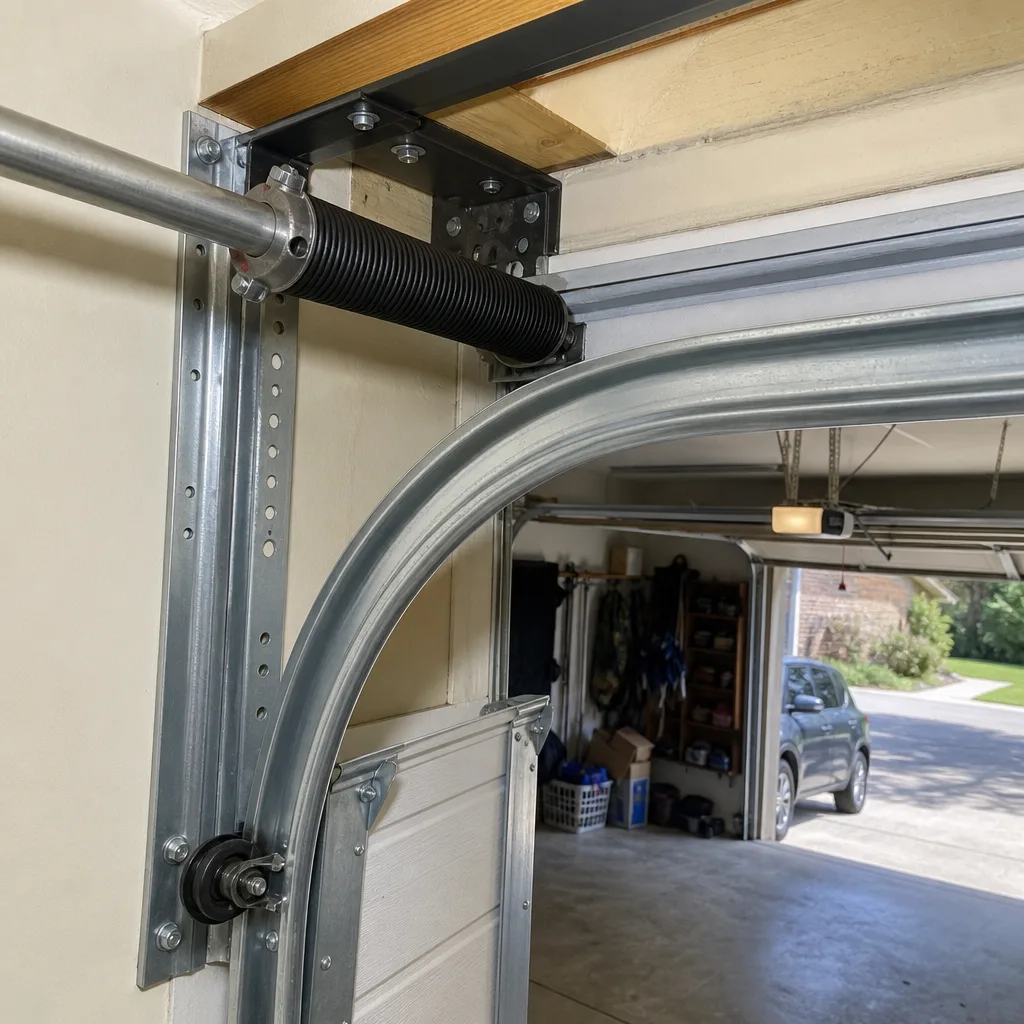 After
After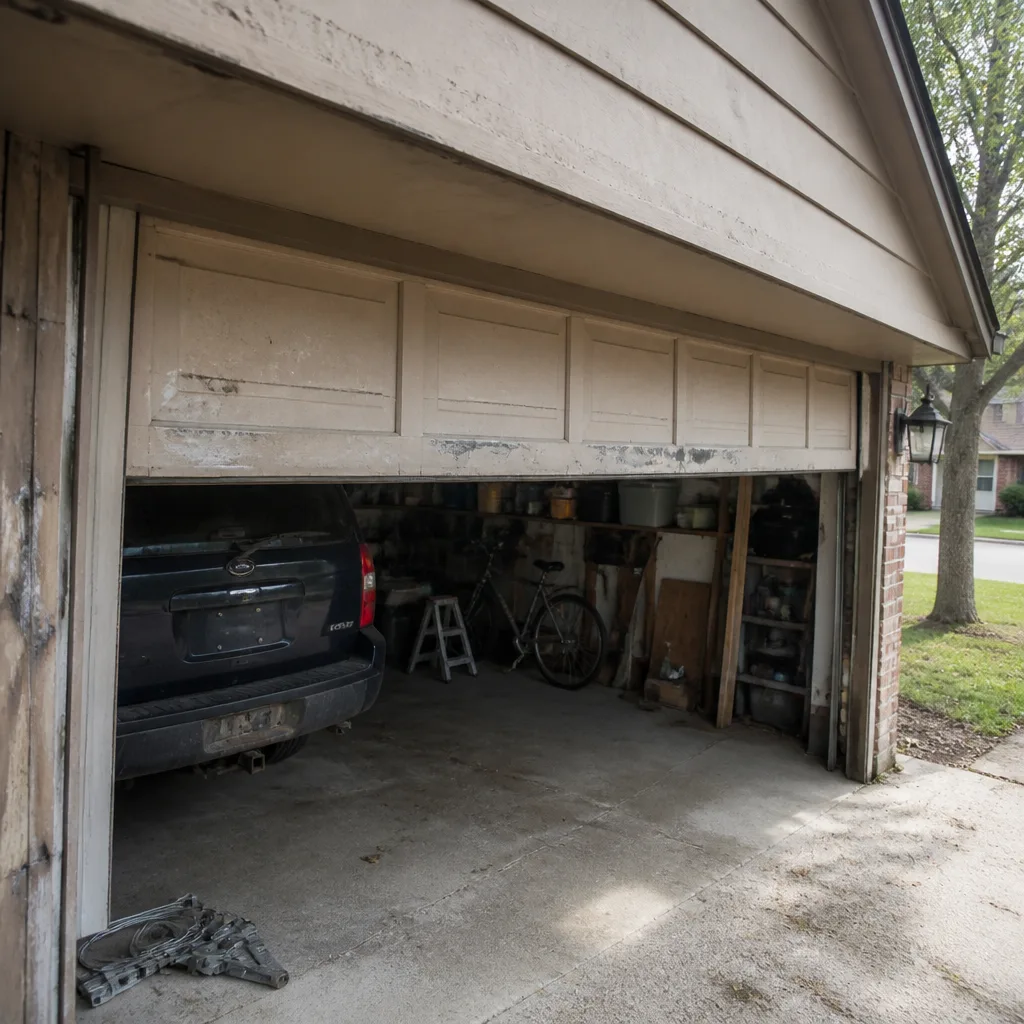 Before
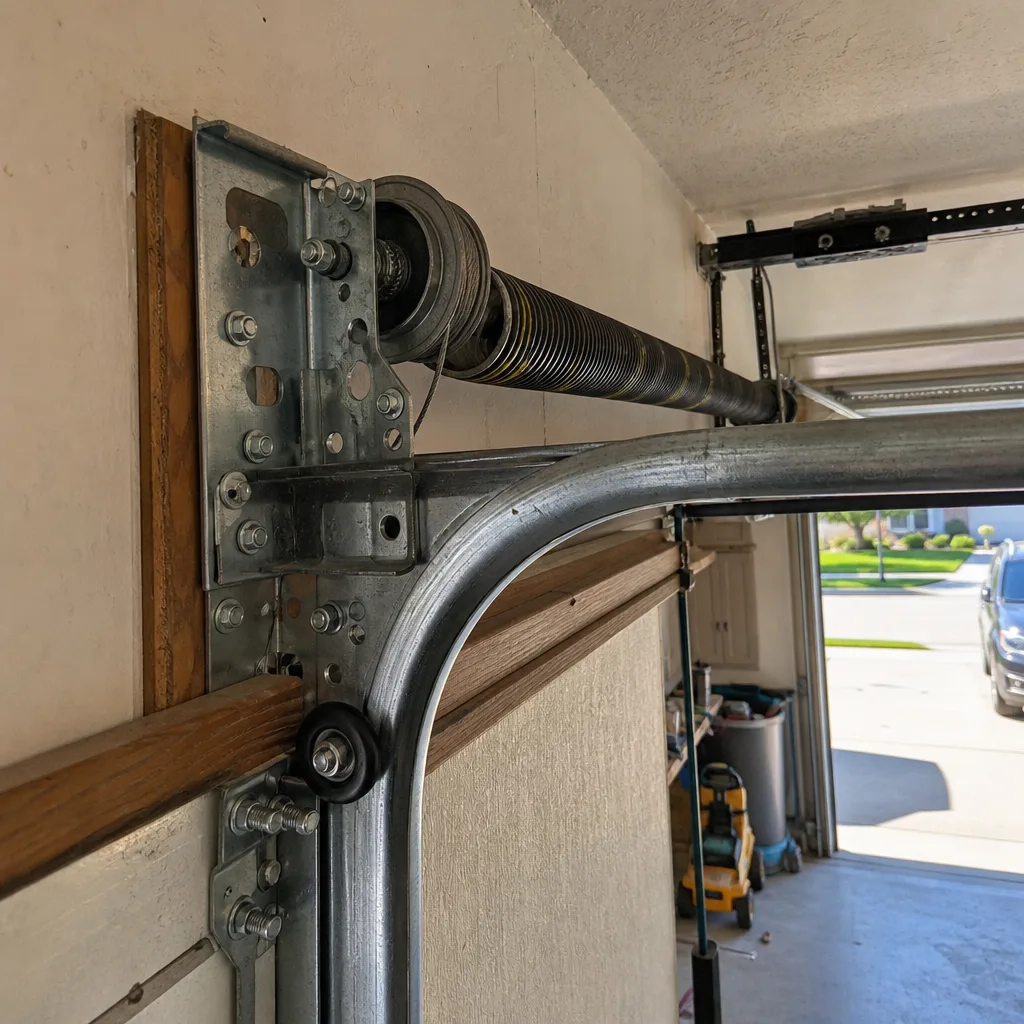 After
AfterThe Complete Guide to Garage Door in Katy
The average Katy garage door cycles 1,500 times a year. That is more mechanical work than any other moving part of your house. Yet most homeowners we meet in Cinco Ranch, Old Katy, and the Grand Lakes area inspect their door exactly zero times before calling for emergency repair. This guide maps every decision you will face as a Katy homeowner, in the order you will actually face it. From choosing your first door on new construction to knowing when a spring is about to let go, we have organized what matters and stripped out what does not.
Quick Answer
A garage door in Katy must withstand 90-degree humidity, sudden Gulf Coast storms, and thermal expansion cycles that stress springs and seals more aggressively than in drier parts of Texas. The right door is properly sized for your opening, insulated to at least R-6 for attached garages, paired with a opener matched to the door’s weight, and maintained on a schedule that tracks five components that age independently. Most Katy homeowners replace their door once in 25 years of ownership. Doing it right the first time, and maintaining it properly after, saves thousands in premature replacement and emergency callouts.
Table of Contents
- How Katy Climate Stresses Garage Doors Differently
- Choosing Your First Door: New Construction Spec Decisions
- Replacement Sizing and Measurement
- Insulation R-Value Tradeoffs for Katy’s Climate Zone
- What Proper Installation Actually Looks Like
- The Five Components That Age on Separate Schedules
- How to Read a Garage Door Quote Line by Line
- Opener Matching and Smart Features
How Katy Climate Stresses Garage Doors Differently
Katy sits in a pocket of southeast Texas where humidity hangs above 75% for six months of the year and afternoon thunderstorms drop temperature 20 degrees in an hour. That combination creates problems garage doors do not face in Amarillo or El Paso.
Here is what we have observed in 42 years of working Katy homes, from the historic district near Downtown Katy to the newer builds in Cane Island:
- Spring fatigue accelerates. Torsion springs are rated for a certain number of cycles, typically 10,000. But the constant expansion and contraction from 95-degree afternoons to 72-degree evenings after a storm adds micro-stress. In Katy, we see spring failures at 8,000 cycles as often as 10,000. The spring is doing the same work, but the thermal cycling fatigues the metal differently.
- Bottom seals rot from the inside. A rubber seal that looks fine from the outside can be saturated with moisture, growing mold and losing flexibility. We replace more bottom seals in Katy than in drier markets, and the failure is often invisible until daylight shows under the closed door.
- Steel doors sweat. An uninsulated steel door on an air-conditioned garage will condense moisture on its interior surface. Over time, this corrodes the bottom section from the inside out. We have replaced 8-year-old doors in Katy that looked pristine outside and were rusting through at the base.
- Track alignment drifts. Aluminum and steel tracks expand at different rates. In climates with wide daily temperature swings, the mounting brackets loosen incrementally. A door that ran quiet in March may rattle by September.
The practical takeaway: Katy homeowners should inspect their door seasonally, not annually. The spring inspection matters more here than in drier climates. And an insulated door is not a luxury in Katy. It is a moisture-control measure.
For homeowners already seeing symptoms, garage door repair in Katy should address climate-specific wear, not just the broken part.
Choosing Your First Door: New Construction Spec Decisions
Builders in Katy typically install a builder-grade steel door with minimal insulation. It meets code. It does not meet the climate. If you are buying new construction in Katy, the garage door is one of the easiest upgrades to negotiate before closing, and one of the hardest to change afterward.
Here is the decision tree we walk homeowners through:
- Determine attachment. An attached garage shares at least one wall with conditioned space. The door needs R-6 minimum to prevent thermal transfer and condensation. A detached garage can use R-0 to R-4 unless you are conditioning the space for workshop use.
- Measure the rough opening. Standard is 8×7 for single car, 16×7 for double. But Katy has many 18-foot and 20-foot openings for three-car configurations. Custom widths add 3-4 weeks to lead time. Confirm before you order.
- Select material for the exposure. West-facing doors in Katy take brutal afternoon sun. Steel with a baked enamel finish holds up better than wood in that exposure, though wood composite offers a middle ground. North-facing doors can use wider material options.
- Choose window placement carefully. Windows raise the door weight, which requires a heavier spring and opener. They also reduce insulation value at the panel. In Katy, we recommend windows in the top section only, both for security and to minimize thermal loss.
- Specify the hardware package. Builders often use 10,000-cycle springs. We specify 20,000-cycle springs for Katy homes, given the climate stress. The upcharge is modest. The replacement cycle doubles.
We have installed doors in Cross Creek Ranch, Firethorne, and Seven Meadows where the homeowner negotiated the upgrade during construction and saved the full replacement cost five years later. The builder’s standard door was failing by year six.
For a full overview of options, see our garage door installation in Katy page.
Replacement Sizing and Measurement
Replacement sizing is not as simple as measuring the old door. We have arrived at Katy homes where the previous installer shoehorned a 15-foot-11-inch door into a 16-foot opening, or hung a 7-foot door in an 8-foot opening with a filler strip at the top. Both create problems.
Here is how we measure for replacement:
- Width at three points: top, middle, and bottom of the finished opening. Use the smallest dimension. A 16-foot opening that measures 15 feet 10 inches at the bottom needs a custom door, not a standard 16-footer forced in.
- Height at both jambs and center: concrete settles. The left jamb may read 83 inches while the right reads 84. The door must fit the smaller dimension, or the track must be modified.
- Headroom: distance from top of opening to nearest obstruction, typically 12 inches for standard torsion spring systems, 4-6 inches for low-headroom kits. Many Katy homes with finished garage ceilings or ductwork need low-headroom hardware.
- Backroom: depth from opening to rear wall. Must equal door height plus 18 inches for opener rail. A 7-foot door needs 8.5 feet of backroom minimum.
- Sideroom: space on each side of opening. Standard track needs 3.75 inches. If you have shelving, plumbing, or electrical panels adjacent, verify this dimension.
We carry measuring tools and common door sizes on our trucks, but custom sizes require factory order. In Katy, most custom doors arrive in 10-14 business days. We do not ask you to wait for a second measurement visit. We measure once, confirm the order, and schedule installation for the day after delivery.
Insulation R-Value Tradeoffs for Katy’s Climate Zone
Katy sits in IECC Climate Zone 2, hot-humid. The garage door is the largest uninsulated surface in most homes. The question is not whether to insulate, but how much, and with what material.
| R-Value | Material | Best For | Katy-Specific Note |
|---|---|---|---|
| R-0 to R-4 | Single-layer steel, no insulation | Detached, unconditioned garages | Will sweat in summer; expect corrosion at base within 5-7 years |
| R-6 to R-9 | Polystyrene, steel sandwich | Attached garages, standard use | Sweet spot for Katy; stops condensation, reduces HVAC load |
| R-12 to R-18 | Polyurethane, steel or composite | Conditioned workshops, west-facing doors | Highest moisture resistance; best for sun-exposed installations |
| R-18+ | Polyurethane with thermal break | Living space conversions, extreme exposure | Often overkill for standard Katy garage; premium cost |
Polyurethane fills the cavity completely and bonds to the steel skin, creating a composite structure that resists the denting and oil-canning we see in polystyrene doors after a few Katy summers. The R-value difference matters, but the structural difference matters more over time.
For a west-facing door in Katy, we typically recommend R-12 polyurethane minimum. For a north-facing detached garage, R-6 polystyrene is adequate. The upgrade cost is usually $150-400 depending on door size. The energy savings are modest. The moisture protection and door longevity are not.
What Proper Installation Actually Looks Like
Most Katy homeowners have never watched a garage door installation. They sign the quote, leave for work, and return to a finished door. That opacity creates anxiety. Here is what should happen, step by step, so you know whether your installer is doing the work properly.
- Pre-arrival confirmation. The installer calls 30 minutes out, with the door and hardware verified on the truck. No “we will pick it up on the way” surprises.
- Protective setup. Drop cloths, vehicle protection, and clear workspace. Your garage contents are not moved without permission.
- Removal and disposal. Old door, track, and hardware removed. Haul-away included in quote. No dumpster left in your driveway.
- Jamb inspection and repair. Wood jambs are checked for rot, especially at the base where Katy humidity concentrates. Rot is repaired or replaced before the new door hangs. Skipping this is common and costly.
- Track installation with laser level. Vertical tracks plumb within 1/8 inch. Horizontal tracks pitched 1/4 inch back toward the opener for proper roller travel.
- Spring calibration for the specific door weight. Springs are wound to balance the door at mid-travel. A properly balanced door stays put at 3-4 feet open without drifting. This is tested, not guessed.
- Opener installation with safety reversal test. Force settings adjusted for the actual door weight. Photo eyes aligned and tested with a 2×4 obstruction. This is legally required and non-negotiable.
- Written documentation. Warranty terms, maintenance schedule, and the 90-Day Done Right Promise provided before the installer leaves. Not emailed later. In your hand.
At Mainspring, our technicians arrive with springs, cables, openers, and hardware for most standard installations. Single-visit completion is the norm, not the exception. We have been called to Katy homes where another company installed the door on day one, promised to return with the correct springs, and never showed. That does not happen when the parts are on the truck.
For opener-specific work, see our garage door opener in Katy page.
The Five Components That Age on Separate Schedules
A garage door is not one machine. It is five systems that share space. Treating them as a single unit leads to premature failure and unnecessary replacement. Here is how we track them in Katy homes:
1. Springs (torsion or extension)
Rated in cycles. Standard: 10,000. High-cycle: 20,000-50,000. At 1,500 cycles per year, a standard spring lasts 6-7 years in Katy, but we see 5-year failures due to thermal stress. Inspect annually for coil gaps, rust, or oil streaks. Replace in pairs even if only one breaks. The matched spring is fatigued similarly and will fail within months.
2. Cables and pulleys
Cables fray from the inside. By the time you see outer wear, they are dangerous. We replace cables every 7-10 years as preventive maintenance in Katy, given the humidity corrosion. Pulleys wear at the bearing. A grinding sound during operation usually means pulley, not opener.
3. Rollers and hinges
Nylon rollers degrade in UV; steel rollers rust in humidity. In Katy, we prefer sealed-bearing steel rollers with zinc coating. Hinges wear at the pin. A door that shudders at a certain point in travel usually has a worn hinge, not a track problem.
4. Track and mounting hardware
Bracket bolts loosen from vibration. We check and torque all fasteners annually. Track dents from vehicle contact are common in Katy garages where SUVs and trucks are the norm. Even a small dent causes roller binding and premature wear.
5. Opener and safety systems
Opener motors last 10-15 years with proper use. Safety sensors fail from misalignment, moisture, or UV degradation of the lens. In Katy, we see moisture intrusion in sensors mounted low where rainwater pools. We mount sensors with slight upward tilt and seal the wire entry.
Our $89 Seasonal Tune-Up addresses all five systems on a single visit. Most Katy homeowners schedule it in October, before the holiday garage-use peak, or in March, after the winter humidity cycle.
How to Read a Garage Door Quote Line by Line
The second most common complaint we hear from Katy homeowners, after “they never showed,” is “the final bill was higher than the quote.” Here is how to read a quote so that does not happen to you.
Door sections: Should specify manufacturer (Clopay, Amarr, Wayne Dalton), model number, gauge of steel, insulation type and R-value, and finish color. Vague descriptions like “premium steel door” allow substitution.
Hardware package: Must list spring cycle rating, track type (standard or low-headroom), roller type and count, and hinge count. A 16×7 door needs 10-12 rollers depending on panel count. Fewer means corners were cut.
Opener: If included, specify brand (LiftMaster, Chamberlain, Genie), model, horsepower, drive type (belt, chain, screw), and included remotes. Smart features should be itemized separately, not bundled vaguely.
Labor: Should state flat rate or hourly with estimated hours. We quote flat rate for standard installations. Hourly quotes incentivize speed over quality.
Removal and disposal: Explicitly included or excluded. We include it. Some Katy competitors add $150-300 as a line item you did not expect.
Warranty: Door warranty (typically 1 year from manufacturer, extendable), hardware warranty, and labor warranty. Our 90-Day Done Right Promise covers labor regardless of manufacturer terms. It is stated in writing on every job.
Permits: Katy does not require permits for garage door replacement on existing structures. New construction requires builder coordination. If a quote includes a permit fee for replacement, ask what municipality requires it. For a deeper look at regulations across the state, see Garage Door Permits, Codes & Inspections in TX: What You Need to Know.
The price is agreed before any work begins. That is our standard. If a quote says “estimate subject to change” or “additional charges may apply,” the final number is not controlled. Get a second opinion. Ours is free.
Opener Matching and Smart Features
The opener must match the door, not the other way around. A heavy insulated door with a 1/2-horsepower opener strains the motor and wears the drive system prematurely. Here is the matching rule we use in Katy:
- Single steel door, uninsulated or R-6: 1/2 HP adequate
- Double steel door, uninsulated: 1/2 HP minimum, 3/4 HP preferred
- Double door, insulated or wood: 3/4 HP minimum
- Carriage house or solid wood door: 1 HP, with battery backup
Drive type matters for noise and maintenance. Belt drive is quietest, best for bedrooms above or adjacent to the garage. Chain drive is economical and durable but louder. Screw drive is rare now; we do not recommend it for Katy humidity.
Smart features have stabilized. Wi-Fi connectivity, phone app control, and camera integration are standard on mid-tier openers from LiftMaster and Chamberlain. We install these regularly in Katy. The practical value is knowing whether you left the door open, and closing it remotely. The security value is activity logging. The gimmick value is voice control, which most homeowners use twice and forget.
Battery backup is code in some states, not Texas. We recommend it anyway. A power outage during a Katy thunderstorm should not trap your vehicle or leave your garage unsecured.
For detailed opener options, see our garage door opener in Katy page.
Common Mistakes to Avoid
- Ignoring the spring cycle rating. A 10,000-cycle spring in Katy’s climate may fail in 5 years. The $40 upgrade to 20,000 cycles pays for itself twice over.
- Installing an uninsulated door on an attached garage. The condensation damage to the door base, and the HVAC load increase, cost more than the insulation upgrade within three years.
- Matching a new door to an old opener. We see this in Katy re-sales frequently. The new door is heavier. The old opener strains. The opener fails in 18 months, and the homeowner blames the opener, not the mismatch.
- Neglecting the jamb condition. Rot at the base of wood jambs is invisible until the new door is hung and gaps appear. Inspect before ordering.
- Accepting a verbal quote. Every number should be on paper, with model numbers and specifications. Verbal quotes allow substitution and surprise charges.
- Skipping the safety reversal test after any adjustment. Federal law requires it. More importantly, a failing reversal system can crush a child or pet. We test on every visit, no exceptions.
- DIY spring replacement. Torsion springs store lethal energy. The winding bars can slip, the cone can fracture, the door can drop. We have seen serious injuries in Katy from homeowners following online tutorials. This is not a cost-saving opportunity. It is a hospital visit waiting to happen.
When to Call a Professional
Call when the door makes a new sound, moves unevenly, reverses unexpectedly, or fails to open fully. These are symptoms, not emergencies, but they precede failures that strand your vehicle or compromise security.
Call immediately if a spring is broken, a cable is frayed, or the door is off-track. These are hazardous conditions. Do not operate the door. Do not attempt repair.
Call for a free estimate if you are considering replacement, if your door is more than 15 years old, or if you have never had a professional inspection. Most Katy homeowners are surprised by what we find in a routine tune-up.
Mainspring Garage Door Co. offers free estimates in Katy. Carl Dutton answers calls personally, or a live person does, 24 hours a day. Call (281) 205-0555.
Frequently Asked Questions
Most common repairs in Katy range from $150 for a cable replacement to $340 for a dual spring replacement, with opener repairs typically between $180 and $280. The exact price depends on door size, spring type, and hardware condition. We state the flat price before any work begins, and our $50 Off Any Repair Over $250 applies automatically. Call (281) 205-0555 for a free, exact quote.
A properly installed steel door with polyurethane insulation lasts 20-25 years in Katy. Uninsulated or single-layer doors often need replacement in 10-15 years due to moisture corrosion at the base. The spring system typically needs replacement every 7-10 years regardless of door condition.
We do not recommend it. Door installation requires precise spring tension calibration, track alignment within 1/8 inch, and safety system testing. The torsion spring alone stores enough energy to cause serious injury or death if mishandled. Our technicians are trained under the K.E.Y.S. values code and complete most installations in a single visit with the parts on the truck.
R-6 minimum for attached garages to prevent condensation and reduce thermal transfer. R-12 or higher for west-facing doors or conditioned workshops. Detached, unconditioned garages can use R-0 to R-4, but expect faster corrosion at the door base.
Listen for a louder-than-usual bang when the door operates, look for a visible gap in the torsion spring coils, or notice if the door feels heavier to lift manually. A door that drifts down from the open position usually indicates spring fatigue. In Katy, we see spring failures cluster in March and October after thermal stress cycles. If you suspect spring wear, call before it breaks and strands your vehicle.
For repair and emergency calls, yes. We carry springs, cables, openers, and hardware on every truck and complete most repairs in a single visit. Installation and replacement require measurement, ordering, and scheduling, typically 10-14 days for custom sizes. We do not promise same-day installation because that work is measured, ordered, and done right, not rushed.
The Bottom Line
A garage door in Katy works harder than any other moving part of your home, and Katy’s humidity and thermal cycling work harder against it than most Texas climates demand. The right door, properly insulated, professionally installed with the hardware matched to the climate, and maintained on a schedule that tracks five independent aging systems, will last 20-25 years with minimal drama. The wrong door, or the right door neglected, becomes a recurring expense and a recurring frustration.
We have been doing this work since 1984. We have seen every shortcut and every honest mistake. Our standard is simple: the price is stated before the wrench turns, the work is done right the first time, and if it is not, we return at no charge under our 90-Day Done Right Promise. No paperwork, no arguing, in writing on every job.
Call (281) 205-0555 for a free estimate. A live person answers, day or night. Carl Dutton or a member of our team will walk through your situation, give you a straight answer, and schedule a visit at your convenience. Seniors and veterans receive a permanent 5% discount. Second opinions on any written estimate are always free.
Written by Carl Dutton, Owner at Mainspring Garage Door Co., serving Katy since 2016.