
Last updated September 10, 2026
Full 25-point door and opener safety check with every visit - springs, cables, rollers, tracks, and your LiftMaster or Chamberlain opener included
You get a price before we start. It does not change when the truck arrives.
 Before
 After
After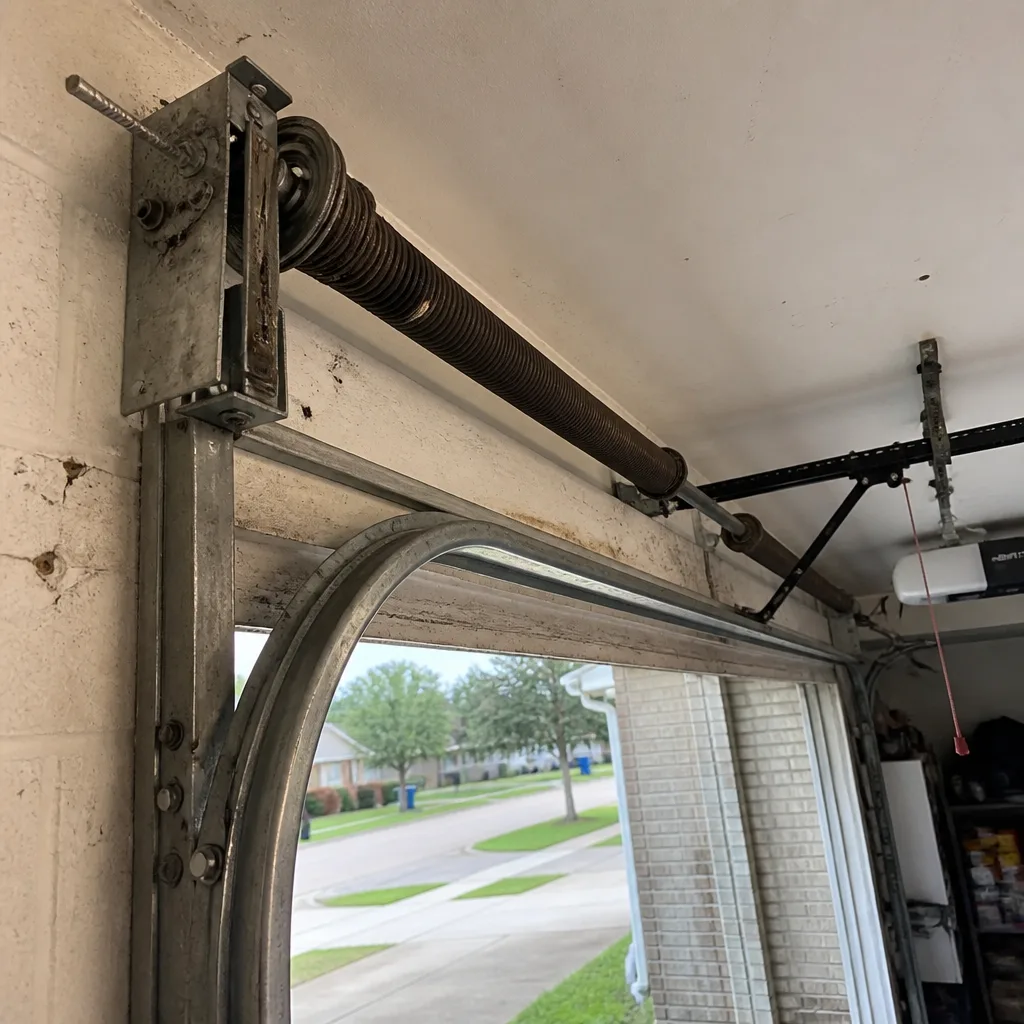 Before
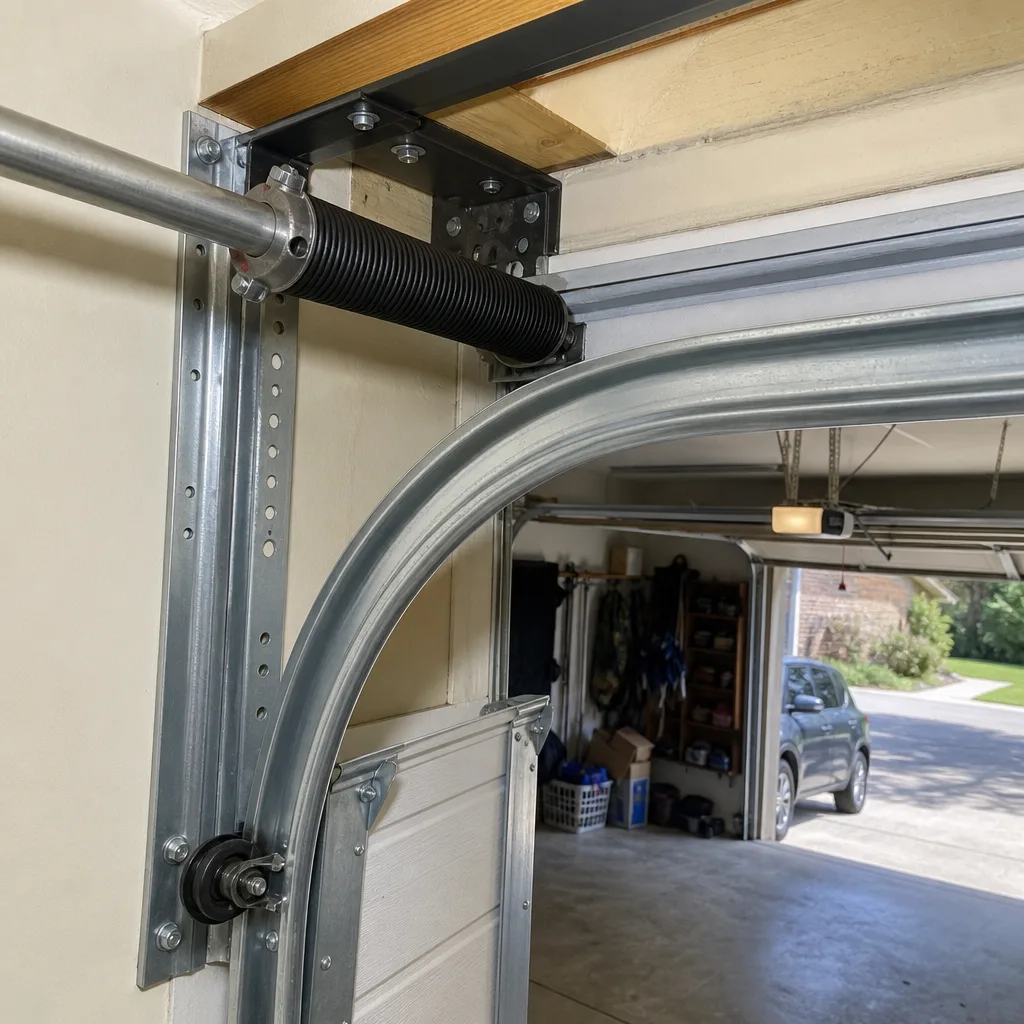 After
After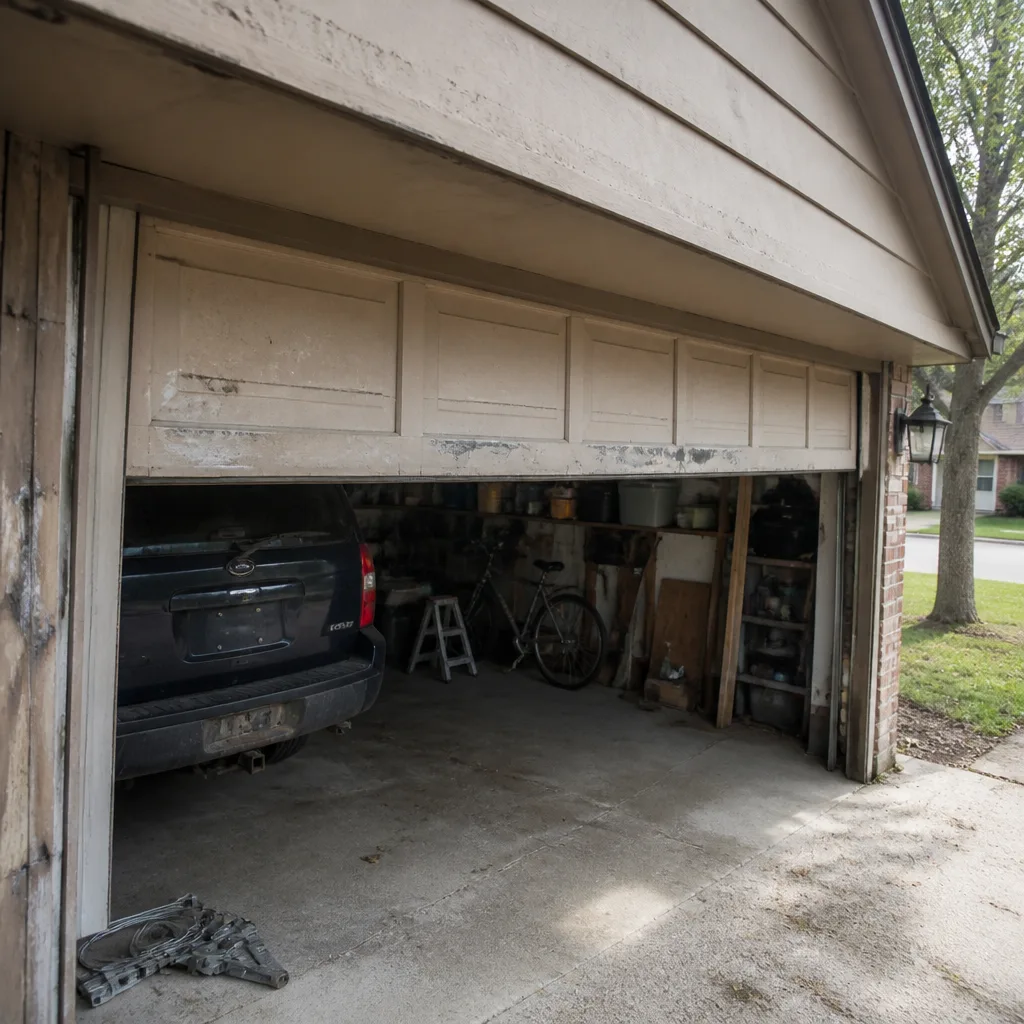 Before
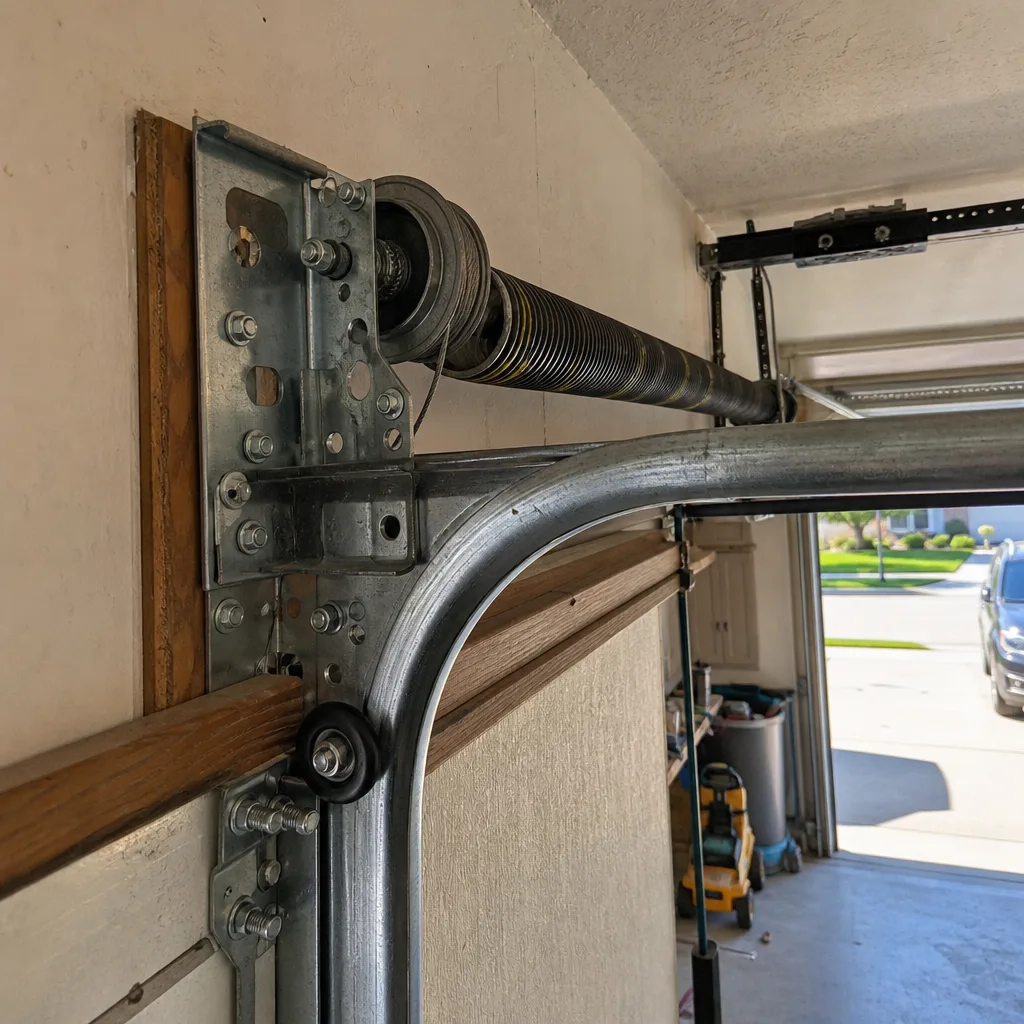 After
AfterGarage Door Warning Signs: A Katy Homeowner’s Reference Guide
The loudest garage door in the neighborhood isn’t the newest - it’s usually the one that’s three months from a broken spring, and the noise is the door telling you exactly that. After 42 years in this trade, we’ve learned that garage doors rarely fail without warning. They send signals for weeks or months before the spring snaps, the cable frays through, or the panel buckles. A homeowner in Katy who knows what those signals look like can often turn a $400 emergency repair into a $90 seasonal adjustment. This guide - along with our The Complete Guide to Garage Door in Katy - catalogs every warning sign we’ve encountered across thousands of homes in Katy, Cinco Ranch, and Seven Meadows: what each one means, which ones you can monitor yourself, and which ones mean it’s time to pick up the phone.
Quick Answer
A garage door in Katy typically gives four categories of warning before it fails: new or louder noises (grinding, popping, scraping), visible changes in alignment or gap at the floor, sluggish or hesitant movement, and physical wear on springs, cables, or rollers. Catching these early allows scheduled maintenance; ignoring them leads to same-day emergency calls, often with additional damage to the door or opener.
Table of Contents
- Sound Signals: What Your Garage Door Is Telling You
- Visual Signs That Are Easy to Miss
- Movement Problems and What They Mean
- Katy’s Heat-Expansion Cycle: A Local Factor
- The 60-Second Driveway Check
- Urgent Signs vs. Signs You Can Schedule
- Garage Door Opener Warning Signs
- Common Mistakes to Avoid
- When to Call a Professional
- Frequently Asked Questions
- The Bottom Line
Sound Signals: What Your Garage Door Is Telling You
Sound is the earliest and most reliable warning system your garage door has. The problem is that change happens gradually. A noise that started six months ago becomes “just how the door sounds” by March. Here is what we listen for on every service call in Katy, and what each sound indicates about the mechanical condition of the door.
Grinding or Rumbling
Grinding usually points to metal-on-metal contact where lubrication has broken down or rollers have worn flat. In Katy’s climate, where summer garage temperatures routinely exceed 110°F, grease thins and migrates away from bearing surfaces faster than in cooler regions. Steel rollers without ball bearings grind against the track; nylon rollers crack and shed pieces that then jam in the mechanism. The sound is low and continuous, often loudest at the curved portion of the vertical track.
What to check: Look at the rollers while the door is moving. Steel rollers should spin freely; nylon rollers should show intact wheels without cracks. If you see flat spots on steel rollers or missing chunks from nylon ones, the rollers are past replacement interval.
Popping or Snapping Sounds
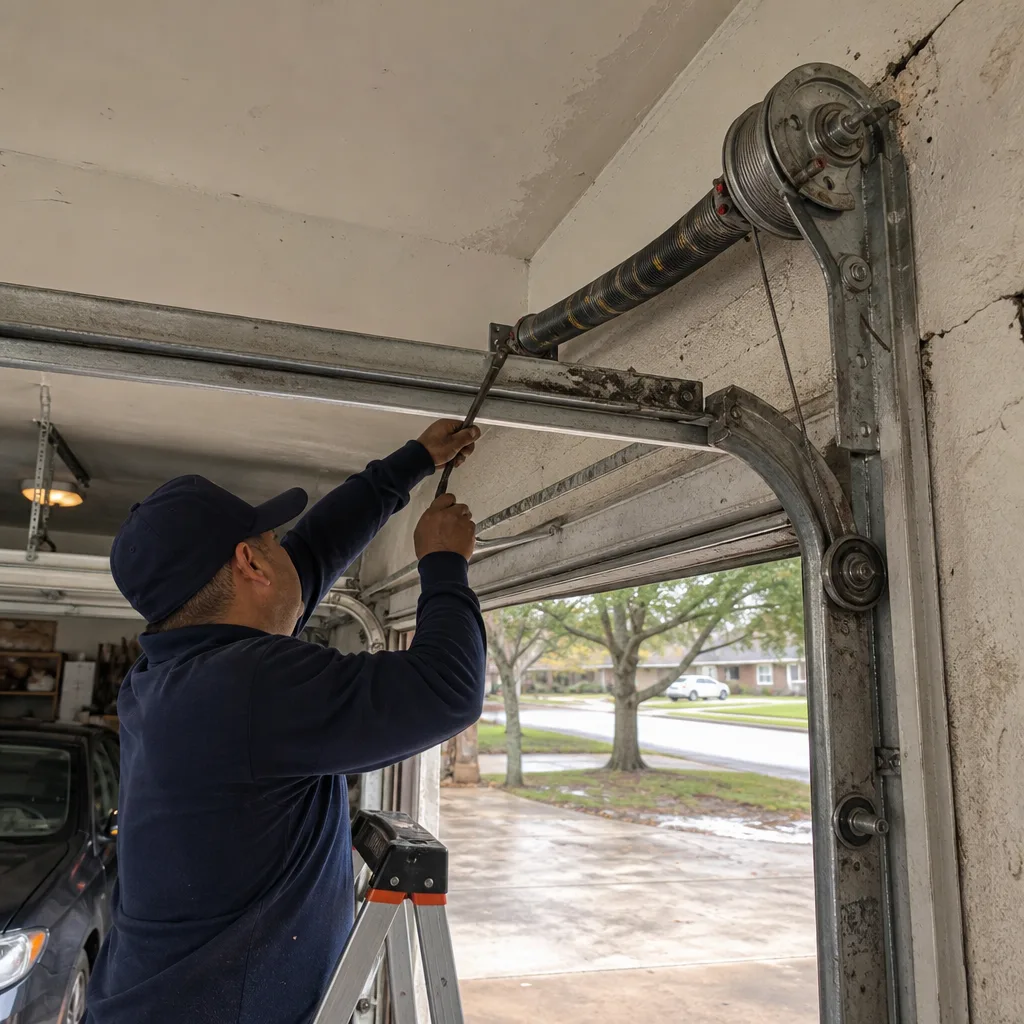
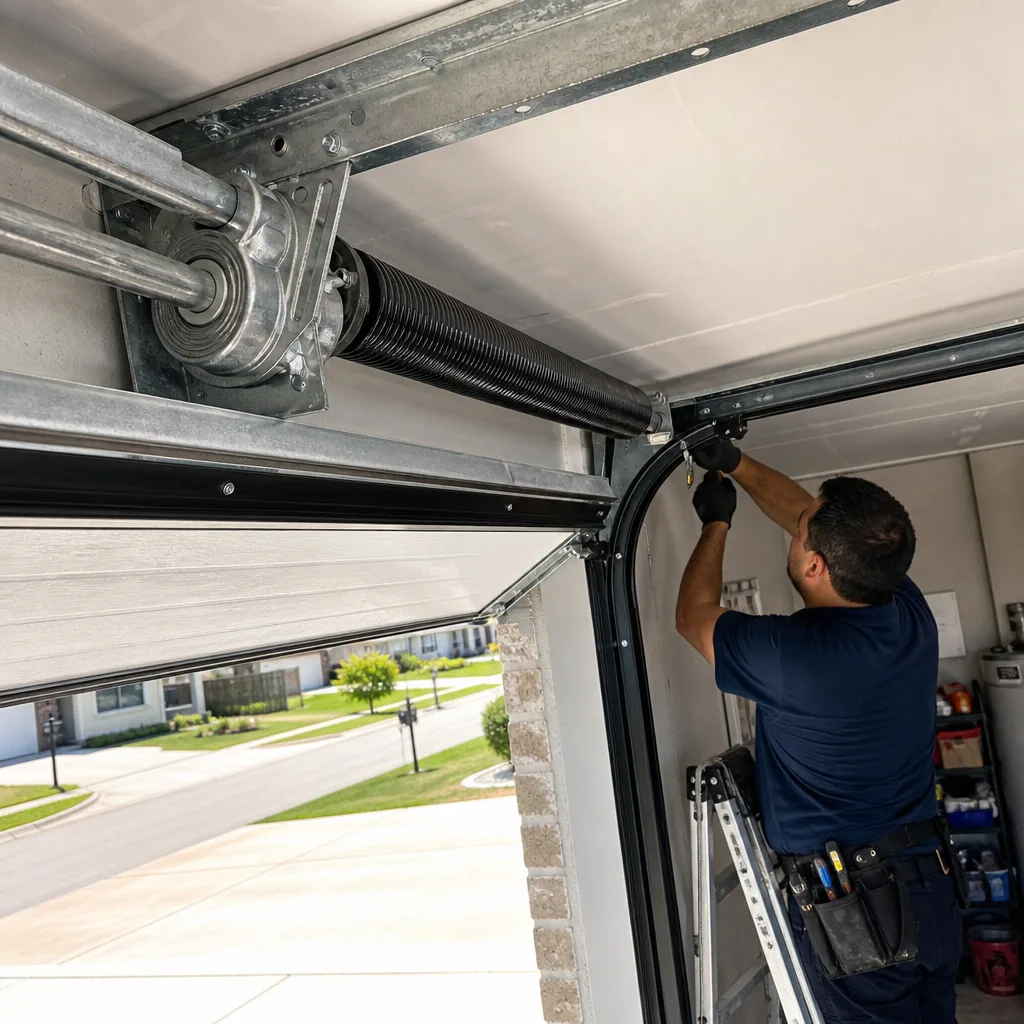
A single pop as the door starts moving, or a series of pops during travel, almost always indicates a torsion spring that is binding or beginning to fail. Torsion springs store enormous energy - enough to counterbalance 150 to 400 pounds of door weight depending on size. When a spring develops a stress crack or the coils begin to separate unevenly, the individual coils rub and release in sequence, creating that popcorn sound.
This is the sound we most want homeowners to recognize. In the garage door repair work we do in Katy, a popping spring caught early means spring replacement. Caught late, it means a door that crashes down, often bending panels, damaging the opener, or pulling cables off drums. The repair cost typically triples.
Scraping or Dragging
Scraping suggests the door is contacting the track somewhere it shouldn’t, or that a cable has slipped off its drum and is rubbing against the door edge or frame. This sound is sharper than grinding, more metallic, and often intermittent - it happens at the same point in the door’s travel each time.
In newer Katy subdivisions like Cane Island or Elyson, where soil settlement can continue for years after construction, we’ve seen door frames shift just enough to put the track out of plumb. The door still operates, but one edge scrapes lightly against the jamb or the track bracket. Left alone, this wears the door’s protective finish and eventually deforms the track itself.
Squealing or High-Pitched Whine
This is the opener, not the door. Belt-drive openers develop it when the belt tension loosens; chain-drive units when the chain needs lubrication or the sprocket wears. Screw-drive openers, which we still service in older Katy homes from the 1980s and 90s, squeal when the carriage nut or the screw itself needs lubrication with specific low-temperature grease.
The whine often appears first in cooler morning temperatures and diminishes as the garage warms. Homeowners mistake this for the problem “fixing itself.” It isn’t. The opener is working harder, drawing more current, and shortening its remaining life.
Delayed Response After Button Press
If there’s a two- to three-second lag between pressing the remote and the door starting to move, the opener’s internal logic is detecting resistance or irregular travel. Modern units from Chamberlain and Genie have safety algorithms that hesitate when force readings exceed baseline. The delay is the opener’s way of asking whether it should proceed. Eventually it will stop asking and simply refuse.
Visual Signs That Are Easy to Miss
Most Katy homeowners look at their garage door daily without seeing it. These are the visual cues that trained technicians notice immediately, and that you can learn to spot in under a minute.
Uneven Gap at the Floor
Close the door and step back. The seal at the bottom should contact the concrete evenly across the full width. A gap on one side - even half an inch - indicates a problem with spring tension balance, cable length, or a door that has come off its proper vertical alignment.
In Katy, where expansive clay soil lifts and settles with moisture changes, this is particularly common in homes built between 2000 and 2010. The foundation moves; the door frame moves with it; the door itself, hung from a fixed header, does not. The result is a door that looks straight but seals poorly on one end. Besides energy loss and pest entry, this strains the opener every cycle as it pulls the door into an uneven frame.
Visible Cable Slack
Lift cables run from the bottom bracket of the door up to the cable drum at each end of the torsion shaft. When the door is fully closed, these cables should be taut with consistent tension. If one cable hangs with visible slack while the other is tight, the door is not balanced. The tight cable is doing more than its share of the work; the slack cable may be ready to slip off the drum entirely.
We see this frequently after a spring has broken on one side of a dual-spring system. The remaining spring keeps the door operational, but the load distribution is wrong. The homeowner notices nothing until the second spring fails or the cable jumps the drum.
Hairline Cracks at Panel Corners
Steel panel doors develop stress cracks at the corners of recessed panel sections, particularly on doors facing west or south that absorb afternoon sun. These cracks start as hairlines, barely visible, and propagate slowly. Once a crack reaches an inch or more, the panel’s structural integrity is compromised. A cracked panel cannot support its share of wind load, which matters in Katy during spring storm season.
Fiberglass and vinyl doors crack differently - they show whitening or crazing at stress points before actual fracture. Wood doors, still common in older Katy neighborhoods like Old Katy and the historic district, split along grain lines at panel joints.
Rust Streaks or Orange Dust
Orange residue on the torsion tube, on the floor beneath the spring, or on the door itself indicates active spring corrosion. Galvanized springs resist this longer, but no spring is immune in a humid Gulf Coast garage. The rust weakens the wire cross-section; a spring that looks intact can be significantly below its rated strength.
We’ve replaced springs in Katy that showed no visible crack but had lost 30% of their cross-sectional area to internal corrosion. They tested at failure load during our diagnostic and would have broken within weeks.
Bent or Distorted Track
Vertical tracks should be plumb; horizontal tracks should angle slightly down toward the back of the garage. Any visible bow, dent, or separation from the wall bracket is a problem. Even minor track damage causes rollers to bind, which overloads the opener and can pull the door out of alignment.
Movement Problems and What They Mean
How a door moves reveals the condition of every component in the system. These are the movement patterns we diagnose on service calls, and what each one indicates.
Hesitation on the Way Up
The door starts, stops briefly, then continues. Or it moves in a series of small jerks rather than smooth travel. This pattern points to spring weakness. The springs are not providing enough counterbalance force; the opener is compensating by applying more lifting force than it was designed for. Opener motors overheat under this load; circuit boards fail prematurely.
In our experience across Katy, hesitation on ascent is the single most reliable predictor of spring failure within 60 days. The springs are not yet broken, but they have lost enough of their calibrated tension that the system’s balance is gone.
Slow or Incomplete Reversal
Since 1993, federal law has required garage doors to reverse within two seconds of contacting an obstruction. If your door hesitates before reversing, or fails to reverse at all, the force settings need adjustment or the safety sensors are misaligned. But slow reversal can also indicate mechanical binding - the door is meeting resistance that the opener interprets as an obstruction.
Test this monthly with a 2×4 laid flat across the door path. The door should reverse immediately on contact. If it doesn’t, stop using the door on automatic mode until it’s serviced. This is not a maintenance preference; it’s a safety requirement, particularly in homes with children or pets.
Door That Doesn’t Close Flush
The door reaches the floor but one corner sits slightly high, or the center bows up from the seal. This is usually a cable length mismatch or a bottom bracket that has shifted. It can also indicate a door section that has begun to rack - twisting out of rectangular - from uneven spring tension.
A door that doesn’t seal properly at the bottom is common in Katy after heavy rains, when soil expansion lifts garage slabs unevenly. The door was adjusted for dry-season grade; wet-season grade is different. Seasonal adjustment is normal maintenance in this market.
Drifting Down After Reaching the Open Position
A door that slowly descends a few inches after opening fully has a spring system that is not quite balanced for the door’s weight. The springs are slightly undersprung, or one spring has weakened relative to the other. The opener holds the door up; when the opener stops, gravity slowly wins. This strains the opener’s holding circuitry and will eventually cause travel limit errors.
Excessive Bounce at the End of Travel
Some bounce is normal, particularly on lighter doors. But a door that rebounds several inches after hitting the floor, or oscillates at the open position, has springs that are too strong for the current door weight. This often happens after a homeowner adds insulation or cladding to a door without upgrading the spring calibration. The springs were sized for a 120-pound door; the door now weighs 180. The mismatch works in reverse too - the springs are overpowered for the actual load.
Katy’s Heat-Expansion Cycle: A Local Factor
Garage doors in Katy experience thermal stress that doors in Minneapolis or Seattle do not. Summer afternoon temperatures inside a west-facing garage can reach 125°F. Winter mornings occasionally drop into the 20s. That temperature swing causes repeated expansion and contraction of metal components, and it changes the effective tension of torsion springs measurably.
Here’s what this means in practical terms:
- Spring tension increases in cold weather and decreases in heat. A door that balances perfectly in March may drift closed in July or be heavy to lift in January.
- Steel tracks expand in summer heat. In long garages with extended horizontal track runs, we’ve seen summer expansion cause track joints to separate by an eighth of an inch, creating a bump that rollers catch on.
- Plastic components - opener gears, nylon rollers, some sensor housings - become brittle after years of thermal cycling. They don’t fail in summer; they fail in the first cold snap when the material is least flexible.
- Lubricants thin and run in heat. The grease that protected bearings in April has migrated to the bottom of the bracket by September. Annual re-lubrication is not excessive in this climate; it’s necessary.
In Cinco Ranch and Seven Meadows, where many homes have three-car garages with oversized doors, the thermal mass of the larger door amplifies these effects. The 18-foot-wide door has more surface area absorbing heat, more metal expanding, and more stress on the center hinge and spring system.
We schedule our garage door opener service calls in Katy with this cycle in mind. A door that tests marginal in October will likely fail by February. We tell homeowners plainly: the time to address it is before the cold snap, not after the opener won’t lift the door on a 28-degree morning.
The 60-Second Driveway Check
You do not need to be a technician to catch most early-stage problems. This check takes one minute from outside the garage, with the door closed, and identifies the majority of issues before they become emergencies.
- Look at the bottom seal. Is it evenly in contact with the concrete across the full width? Note any gaps, particularly at corners.
- Check panel alignment. Stand directly in front of the door. The horizontal panel lines should be level. If one side appears higher than the other, the door is racked or a cable has slipped.
- Inspect the visible cable. Look at the cable on each side where it runs from the bottom bracket up to the drum. It should be taut, with no fraying, no broken strands, and no rust discoloration.
- Examine the spring. Look at the torsion spring above the door. You cannot see internal wear, but you can see gaps between coils that weren’t there before, rust streaks, or a slight bend in the spring body. Any of these means call for inspection.
- Test the emergency release. With the door closed, pull the red emergency release handle. The door should lift smoothly with one hand and stay at any position you place it. If it feels heavy, drifts down, or won’t stay put, the spring balance is off.
- Listen to a full cycle. Open and close the door once. New noises, changes in speed, or any hesitation are reasons to schedule service.
This check catches approximately 80% of the problems we see in early stages. The 20% it misses - internal spring fatigue, drum micro-cracks, opener logic board deterioration - require technician tools and experience. Our more guides & resources explain what those diagnostics involve. But the 80% is enough to prevent most emergency calls.
Urgent Signs vs. Signs You Can Schedule
Not every warning sign demands same-day response. Understanding the difference saves you emergency rates for problems that can wait, and prevents you from waiting too long on problems that can’t.
Schedule Within Two Weeks
- New grinding or rumbling that does not affect door operation
- Slight increase in opener noise
- Minor gap at bottom seal, less than half an inch
- Cosmetic rust on hardware without structural involvement
- Remote response that is slow but consistent
These are maintenance items. They will worsen, but they are not imminent failure points. Schedule during regular business hours, take advantage of our $89 Seasonal Tune-Up, and address multiple items in one visit. See How to Hire a Garage Door Contractor in Katy: A Step-by-Step Guide for what to ask during scheduling.
Schedule Within One Week
- Popping or snapping sounds from the spring area
- Visible cable fraying or broken strands
- Door that requires noticeable extra force to lift manually
- Opener that reverses intermittently or shows erratic travel
- Panel cracks that have propagated beyond hairline stage
These are active degradation. The system is still functional but declining. Waiting risks the problem escalating to emergency status, often at inconvenient times.
Call Same Day - Do Not Operate the Door
- Spring that is visibly separated, gapped, or broken
- Cable off the drum or completely slack
- Door that has come out of the track or hangs at an angle
- Opener that runs but door does not move (stripped gear or broken coupler)
- Any situation where the door cannot be secured in the closed position
A broken spring or derailed door is not a DIY project. The stored energy in a torsion system can cause serious injury. We answer our phones live 24/7 for exactly these situations, and our trucks carry the parts to complete most repairs in a single visit.
Garage Door Opener Warning Signs
The opener is often the component homeowners notice first, because it provides the motor noise and the remote convenience. But opener problems frequently reflect door problems, not opener problems. Replacing an opener that is struggling against a poorly balanced door simply destroys the new opener too.
Opener Straining or Laboring
If the opener sounds like it’s working harder than it used to - longer run times, more motor noise, visible slowing on heavy door sections - the likely cause is spring degradation. The opener is designed to lift 10 to 15 pounds of net door weight after spring counterbalance. When springs weaken, the opener sees 50, 80, or 100 pounds. It will fail prematurely.
We test this on every service call. We disconnect the opener and lift the door manually. A properly balanced door feels light and stays at any position. If it doesn’t, we fix the door first, then evaluate whether the opener also needs attention.
Intermittent Remote Response
Remotes that work sometimes but not others, or that require multiple presses, can indicate weak batteries, interference from LED lighting, or failing receiver logic in the opener. But they can also indicate that the opener’s force safety system is triggering unnecessarily - the motor encounters resistance it shouldn’t, concludes there’s an obstruction, and stops. The remote appears to “not work,” but the opener is actually protecting itself from a mechanical problem.
Travel Limits Drifting
The door used to close fully and now stops an inch high. Or it opens fully and then drifts back down a few inches. These are not “just needs adjustment” in most cases. They are symptoms of mechanical change - spring tension loss, cable stretch, or track movement - that has altered the door’s effective travel. Adjusting the limits without fixing the underlying cause masks the problem until something breaks.
For garage door installation in Katy involving new openers, we always verify door balance before mounting the operator. It’s part of our installation standard, not an extra step.
Common Mistakes to Avoid
- Ignoring a change because “it’s always been like that.” In our experience, the door was not always like that. The homeowner’s perception adjusted gradually. If a visitor remarks that your door is loud, believe them.
- Applying WD-40 to garage door components. WD-40 is a solvent and water displacer, not a lubricant. It strips existing grease and attracts dust. Use lithium-based grease on metal-to-metal contact points, silicone spray on weather seals.
- Testing the door by disconnecting the opener and walking away. The emergency release is for emergencies. If you disconnect to test balance, you must be prepared to reconnect it properly. A door left disconnected is a security risk and a safety hazard.
- Replacing the opener when the door is the problem. We see this in Katy several times a year. A homeowner buys a new Chamberlain or Genie unit, pays for installation, and six months later the new opener fails because it was fighting a door with bad springs. Diagnose the system, not the symptom.
- Waiting for “both springs to go” before replacing. Torsion springs are installed as matched pairs. When one breaks, the other has identical cycle life and is carrying an unbalanced load. Replace both, or plan to call us again within months.
- Assuming a quiet door is a healthy door. Some failures are silent. A spring can break internally, with no visible gap, and simply lose tension. The door still operates, but now the opener is overloaded. Regular manual lift tests catch what listening misses.
- Using the door as the primary home entrance without maintenance. Katy homes where the garage is the daily entry point see 1,000+ cycles annually instead of the 500-cycle average. Maintenance intervals should halve accordingly.
When to Call a Professional
Call when you observe any of the urgent signs listed above, when your 60-second check reveals changes from your baseline, or when the door simply doesn’t feel right anymore. Trust your observation. After decades in homes across Katy, we’ve learned that homeowners who say “something’s different” are almost always correct, even when they can’t name the specific change.
For scheduled maintenance, diagnostic visits, or emergency response, Mainspring Garage Door Co. offers free estimates in Katy. Our technicians arrive with springs, cables, rollers, and openers on the truck, and we state the flat price before any work begins. Call (281) 205-0555.
Frequently Asked Questions
Spring replacement in Katy typically ranges from $180 to $340 for standard residential torsion springs, depending on door size, spring type, and whether one or both springs need replacement. We provide an exact quote after measuring your door’s weight and cycle requirements, and that price is locked before we start work. Call (281) 205-0555 for a free estimate - estimates are free, and we honor our $50 Off Any Repair Over $250.
No. Torsion springs store enough energy to cause serious injury or death if mishandled. The winding and unwinding process requires specific tools and training. We do not recommend DIY spring work under any circumstances. Our background-checked, uniformed technicians handle this safely as part of our standard service.
Annual professional service is appropriate for most Katy homes. Doors used as primary entrances, or doors facing west or south with full sun exposure, benefit from inspection every six to eight months. Our $89 Seasonal Tune-Up includes balance testing, hardware inspection, lubrication, and safety sensor verification.
Cold temperatures thicken lubricants, contract metal components, and make nylon rollers and plastic opener gears less flexible. The same door that ran quietly in September may rattle in January. Pre-winter service in October or November addresses this before the cold snap arrives.
No. Our upfront pricing means the quoted price is the billed price. We diagnose before quoting, not after starting work. If we discover additional issues during service, we stop and discuss them with you before proceeding. There are no surprises on the bill.
Standard springs are rated for 10,000 cycles. At two cycles per day, that’s roughly 13 years. In Katy, where many homes use the garage as primary entry, 10,000 cycles may arrive in seven to nine years. High-cycle springs rated for 25,000 or 50,000 cycles are available and appropriate for heavily used doors. We calculate cycle life based on your actual usage pattern.
Yes. Our trucks are stocked with springs, cables, rollers, hinges, and weather seal compatible with all major brands including Clopay and Amarr, plus opener components for Chamberlain, Genie, LiftMaster, and others. Most repairs are completed in a single visit with no waiting for parts.
The Bottom Line
A garage door communicates its condition constantly through sound, sight, and movement. The homeowners who avoid emergency repairs are not lucky; they are observant. They notice when the rhythm changes, when a new sound appears, when the seal no longer meets the floor evenly. They perform the 60-second check seasonally. They call for maintenance before the system demands it.
In Katy, where thermal stress, soil movement, and heavy daily use accelerate wear, this attentiveness pays directly in repair cost and inconvenience avoided. A $89 tune-up that catches a weakening spring replaces a $400 emergency call that also bends a panel and damages an opener.
The door will tell you what it needs. This guide has shown you how to listen.
Written by Carl Dutton, Owner at Mainspring Garage Door Co., serving Katy since 2016.