
Last updated September 10, 2026
Full 25-point door and opener safety check with every visit - springs, cables, rollers, tracks, and your LiftMaster or Chamberlain opener included
You get a price before we start. It does not change when the truck arrives.
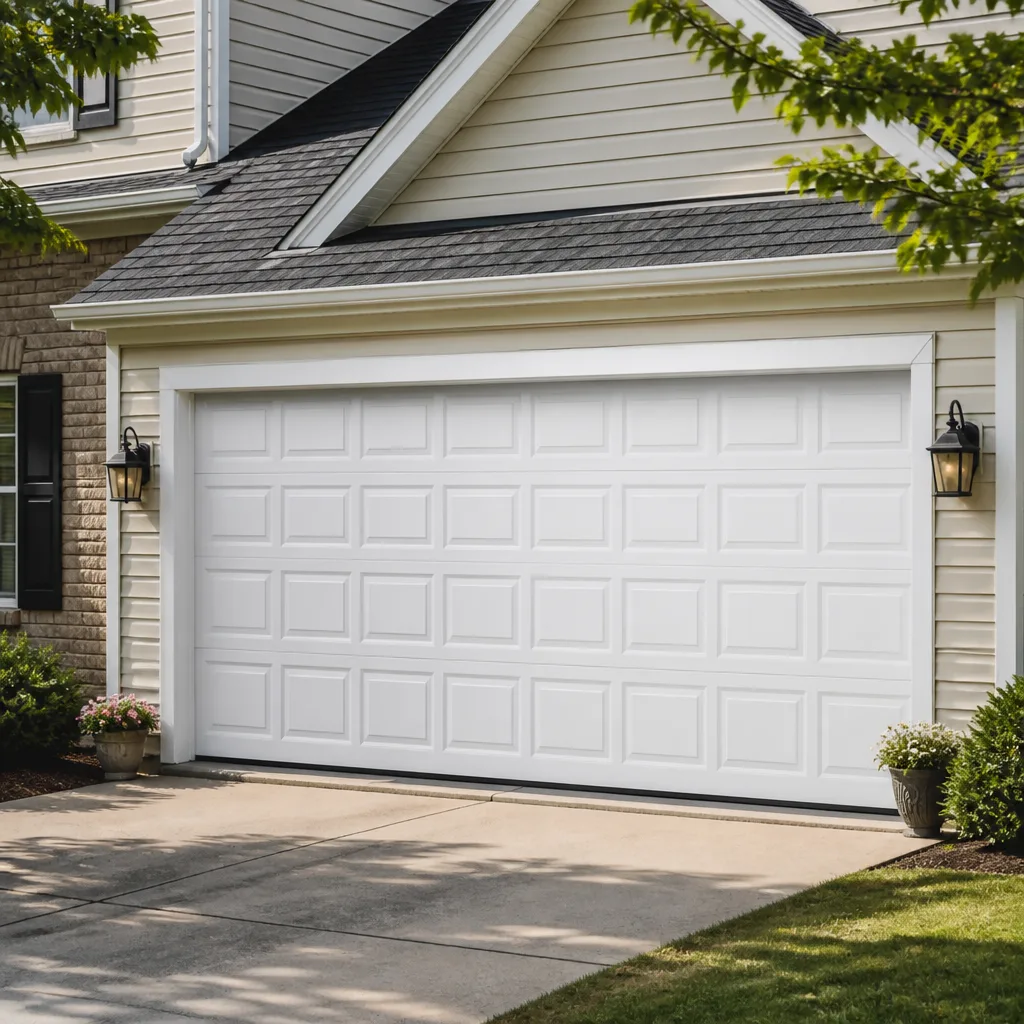
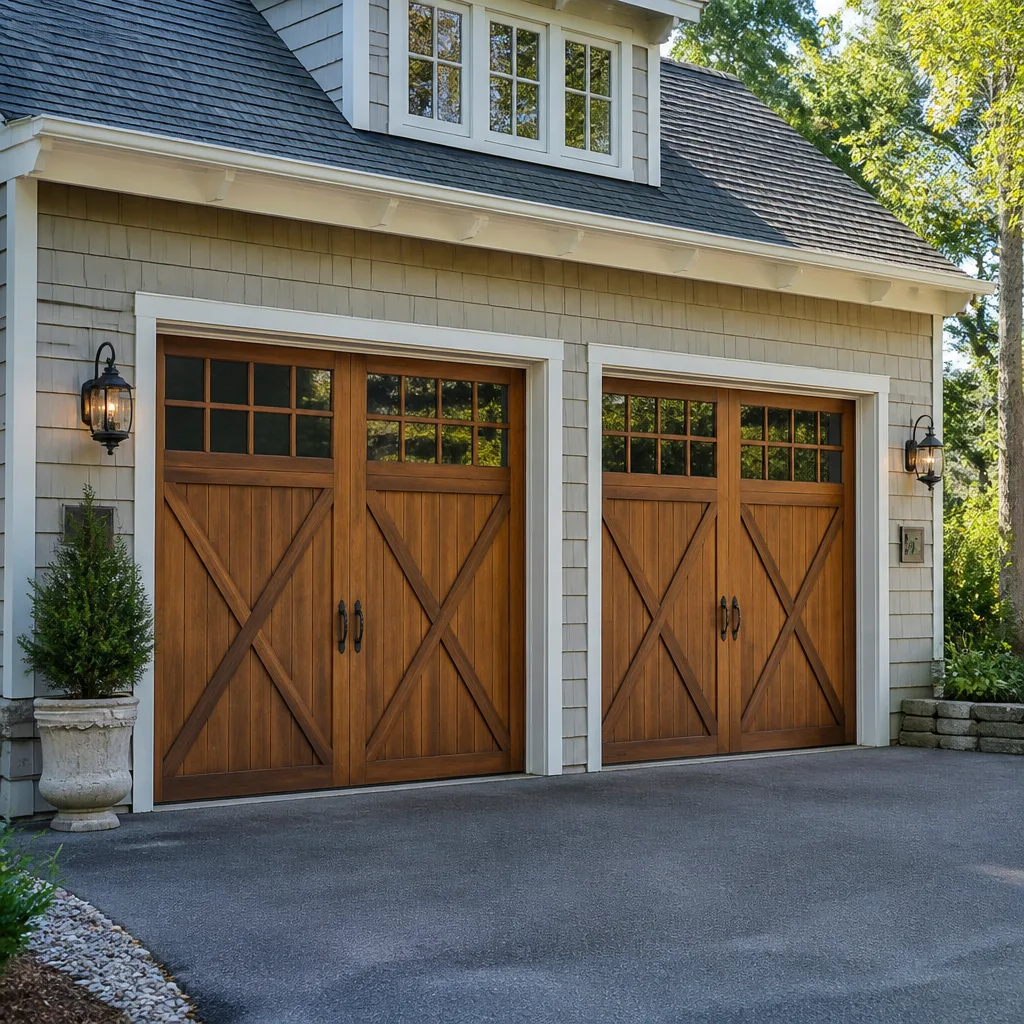
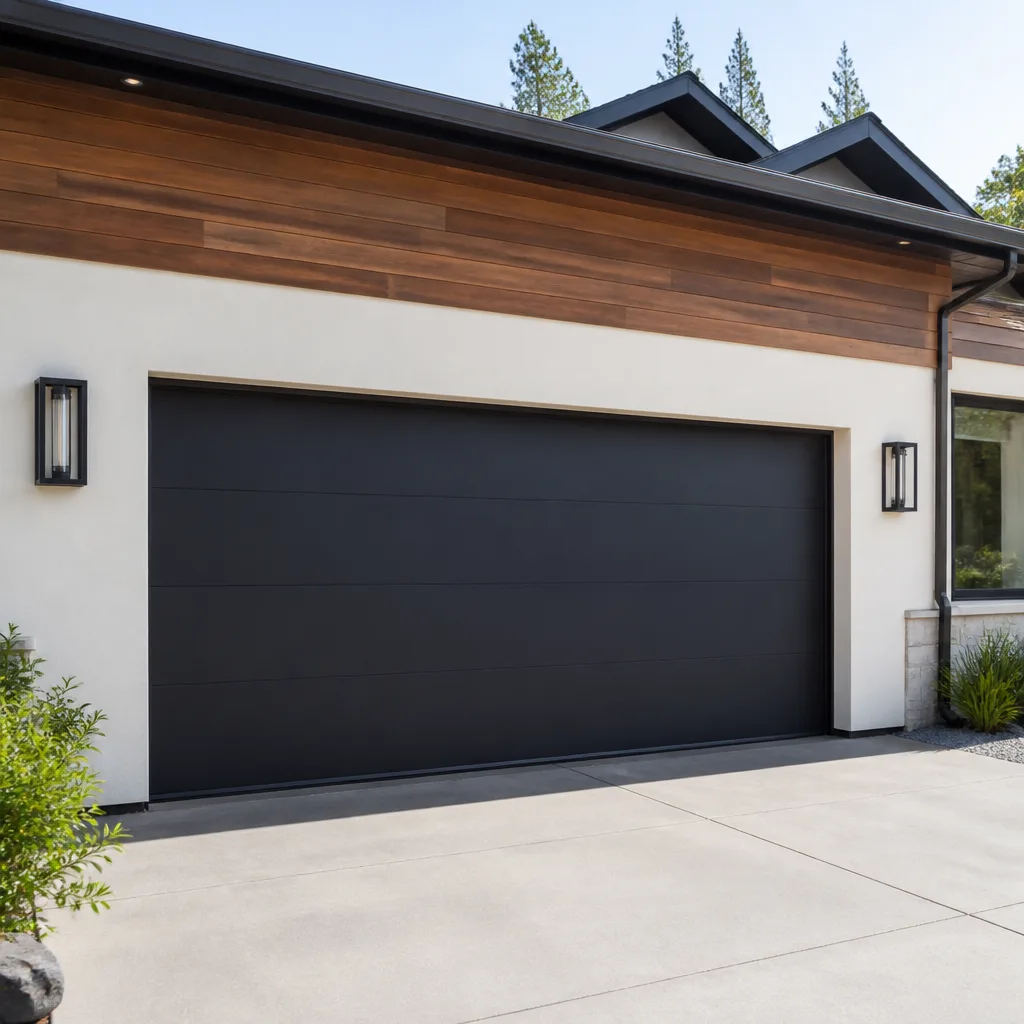
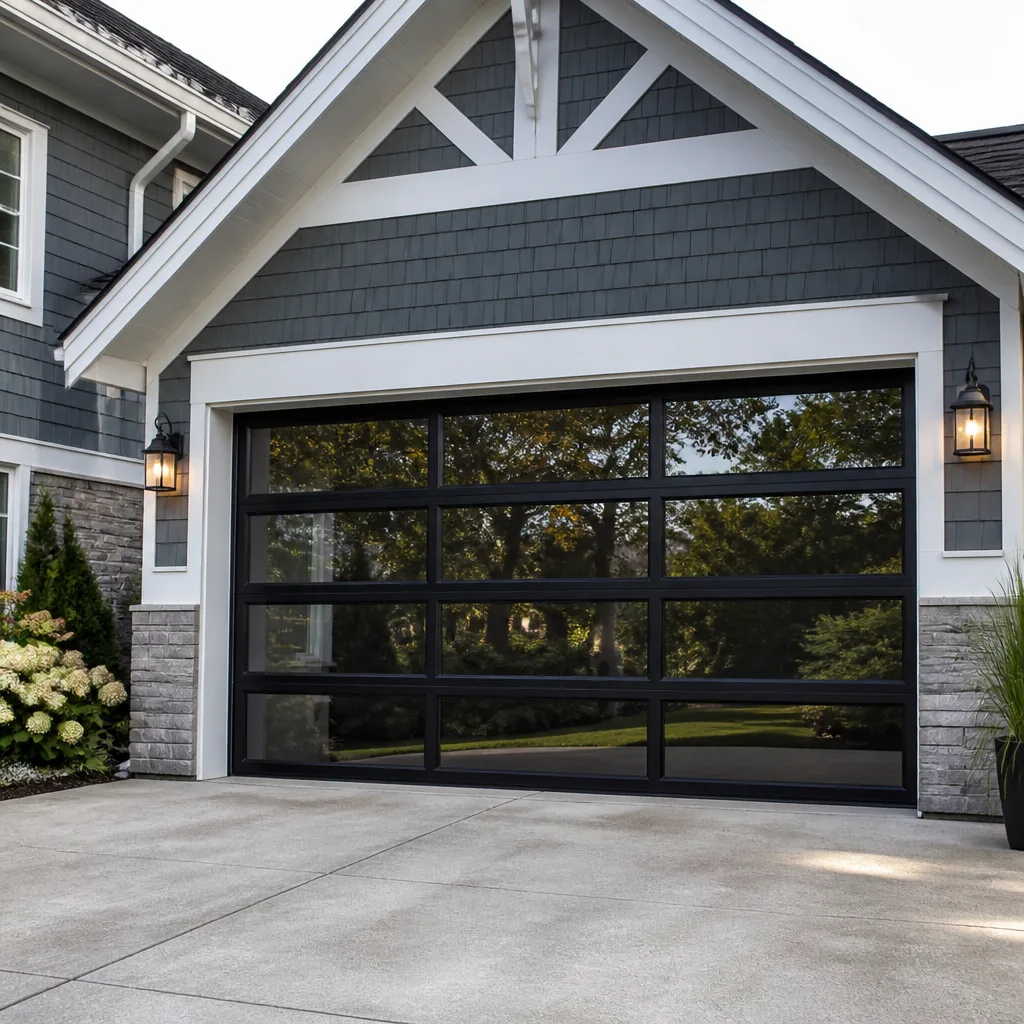
 Before
 After
After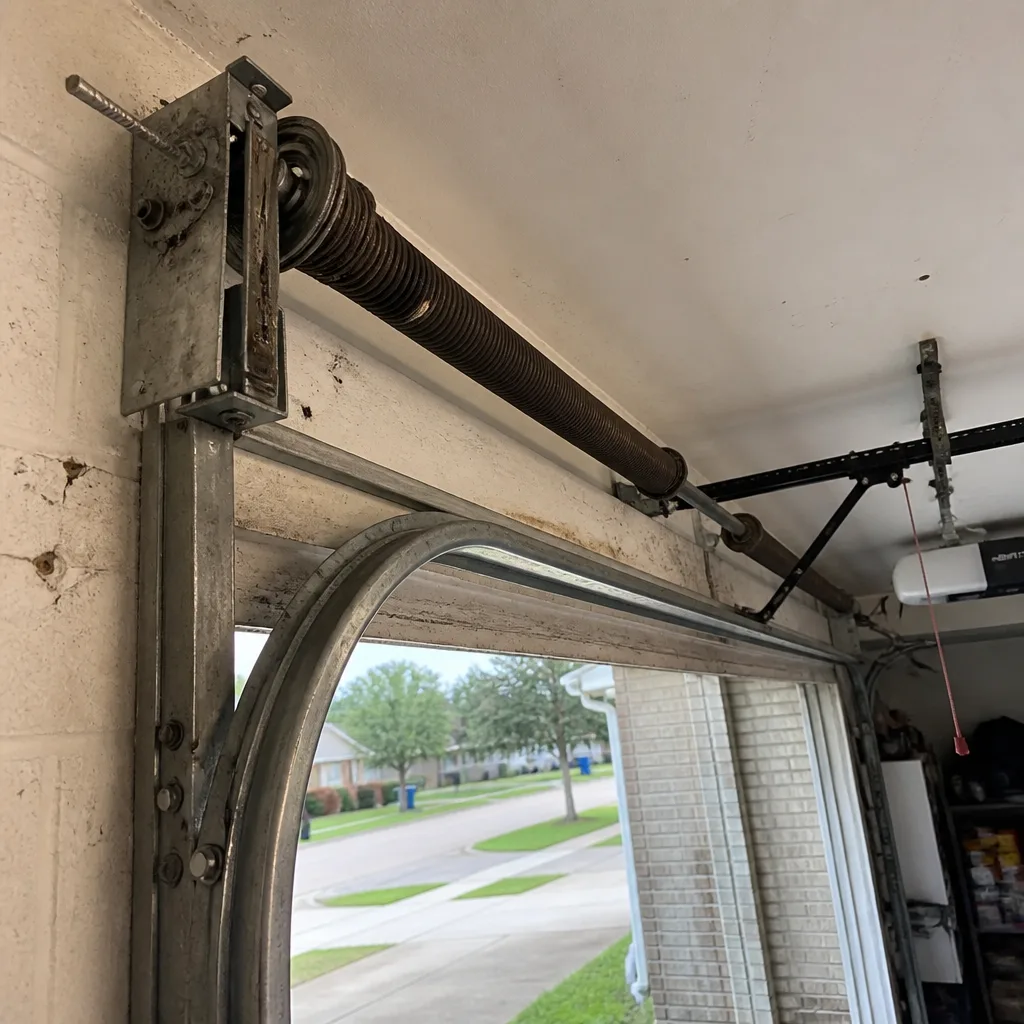 Before
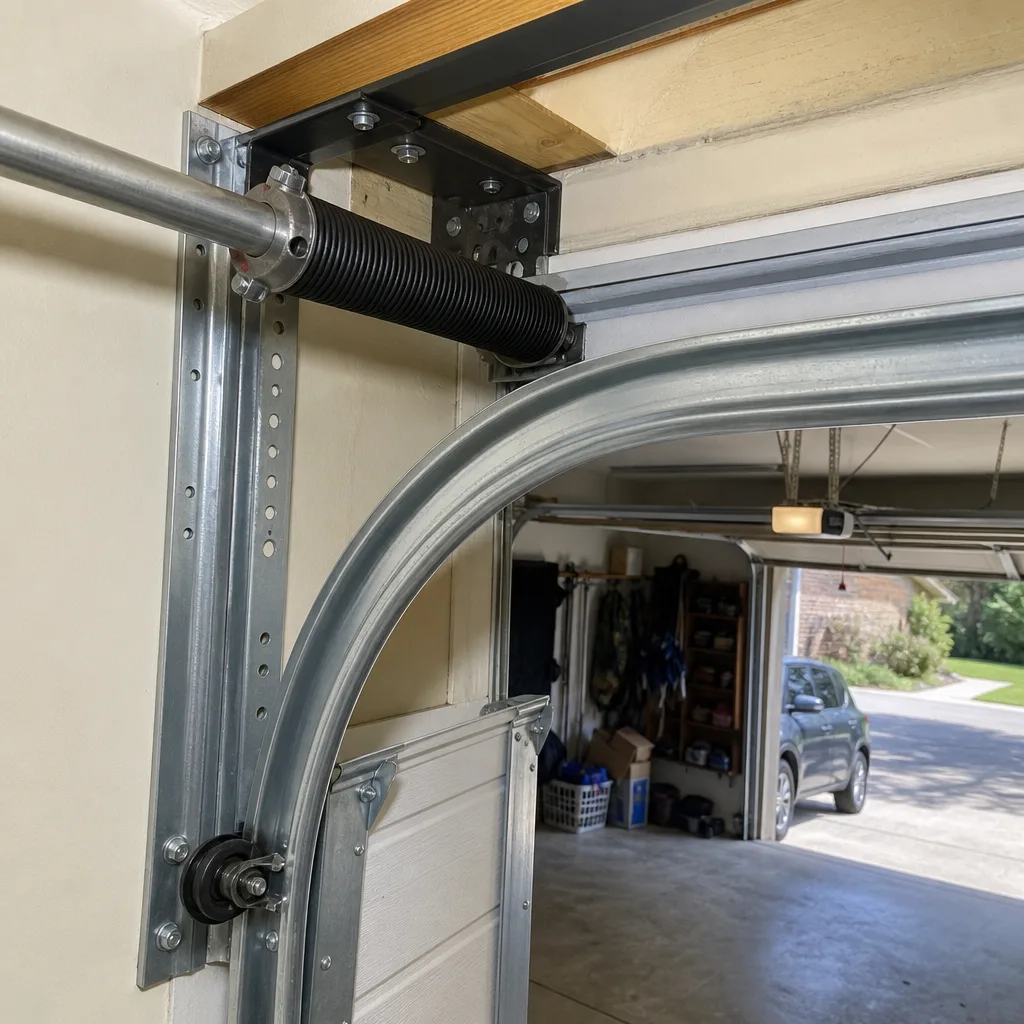 After
After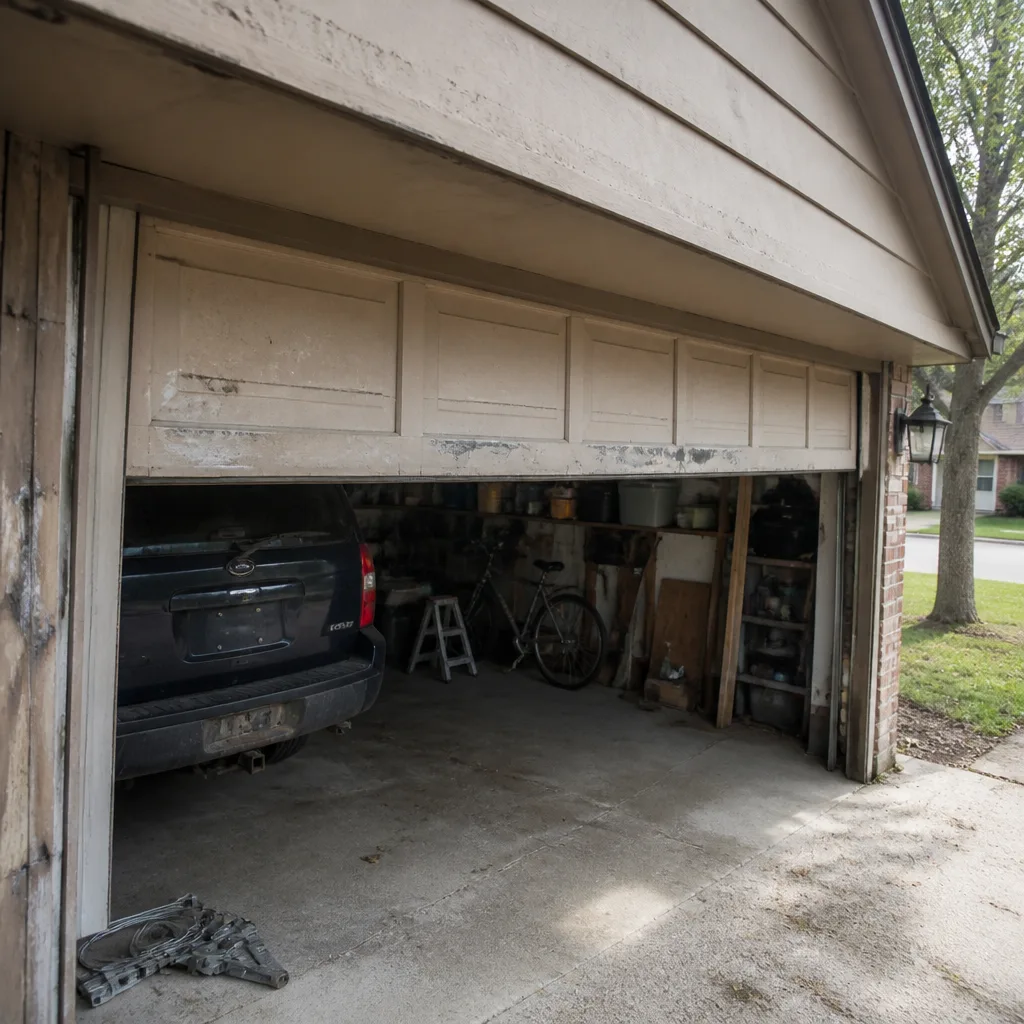 Before
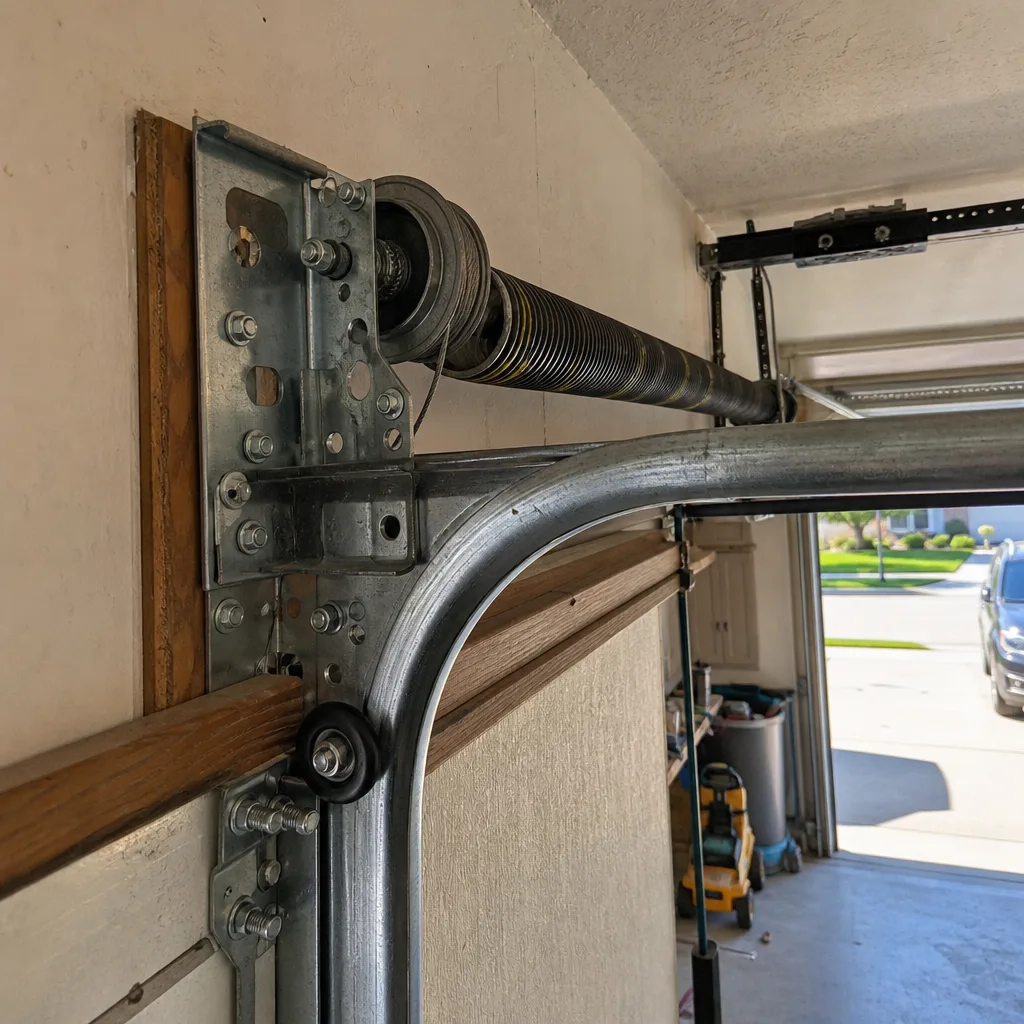 After
AfterGarage Door Repair Maintenance Checklist for Katy Homeowners
Three of the five most common garage door repairs we see on Katy trucks are entirely preventable with a 20-minute check twice a year. None of those checks require tools. The Gulf Coast humidity that warps wood panels in Cinco Ranch, the salt-laden air that corrodes cables near Mason Road, and the UV exposure that turns bottom seals brittle in Old Katy - these are not abstract climate facts. They are the specific failure patterns that show up in our call log every March and October. This guide is built from that log. You will get a month-by-month task list tied to Katy’s actual weather calendar, the exact hardware points that corrode fastest here, and a clear line between what you can safely check yourself and what requires a trained hand.
Quick Answer
Katy homeowners should inspect their garage door every March and October, focusing on balance, reversal sensors, hardware tightness, and seal condition. The humid Gulf Coast climate accelerates cable corrosion and UV damage to rubber seals, so these checks prevent the three most common local failures: swollen panels, snapped cables, and cracked bottom seals. Most of this takes 20 minutes and no tools; torsion spring and cable work should always be left to a professional for Garage Door Repair.
Table of Contents
- The Katy Weather Calendar: When to Check What
- Humidity and Hardware: What Corrodes Fastest in Katy
- The 20-Minute Check You Can Do Yourself
- How to Test Balance, Reversal Sensors, and Manual Release
- What You Can Do vs. What Requires a Licensed Hand
- A Printable Log for Tracking Service and Warranties
- Common Mistakes to Avoid
- When to Call a Professional
- Frequently Asked Questions
- The Bottom Line
The Katy Weather Calendar: When to Check What
Katy does not have four equal seasons. It has a wet spring, a brutal summer, a hurricane window, and a brief cool period that still carries enough moisture to matter. Your garage door feels every one of these phases differently. A checklist written for Denver or Phoenix will send you to check the wrong things at the wrong times.
Here is the calendar we have developed from 42 years of calls in this market:
March (Pre-Storm Season)
This is your primary inspection window. The winter cool has passed, humidity is climbing, and the first severe weather typically arrives in late March or April. Check all rubber seals for winter hardening, test the door balance after months of disuse, and verify that the emergency release has not seized from lack of operation. Lubricate the torsion spring and rollers with a silicone-based product, not WD-40. WD-40 attracts dust and turns into a grinding paste in Katy’s humidity.
May-June (Summer Heat Buildup)
Monitor for panel expansion. Steel doors handle heat well, but wood composite and some Amarr designs with woodgrain overlays can swell enough to bind in the tracks. If your door is sticking mid-travel, the humidity has gotten into the panel core. This is also when opener motors work hardest; listen for strain on the first hot afternoon after a cool morning.
August-September (Peak Hurricane Risk)
Verify wind-load reinforcement if your door is rated for it. Katy falls in a wind-borne debris region, and post-Ike building codes require impact-rated doors on new construction. If your home was built before 2008, your door may not meet current standards. We are not suggesting replacement solely for code compliance, but you should know what you have. See our Garage Door Warning Signs: A Katy Homeowner’s Reference Guide for additional red flags. Check that the track mounting brackets are tight; wind pressure finds loose hardware fast.
October (Post-Hurricane, Pre-Cool)
Your second full inspection. Summer UV has done its damage to seals and weatherstripping. Cables that looked fine in March may now show rust bloom or broken strands from the humidity cycle. This is the ideal time for our Garage Door Repair in Katy seasonal tune-up if you prefer a trained eye.
December-February (Cool Months)
Minimal action required, but do cycle the door manually at least twice. Lack of use causes the lubricant to settle and the release mechanism to stiffen. If you are in a gated community like Seven Meadows or Firethorne where garage doors see less daily use, this matters more.
Humidity and Hardware: What Corrodes Fastest in Katy
The Gulf Coast air carries enough moisture to corrode bare steel in weeks, not years. In our experience, three hardware points fail predictably and earlier here than in drier climates:
Bottom brackets and cable drums
These sit lowest in the door assembly and collect condensation. The bottom brackets anchor the lifting cables; if they rust through, the cable can slip or detach under load. In Katy’s older neighborhoods like Old Katy and the streets near Avenue D, we see this more often because many garages have poor ventilation and dirt floors that hold moisture. Look for orange rust staining on the bracket surface, or any wobble in the cable attachment point.
Torsion spring cables (lift cables)
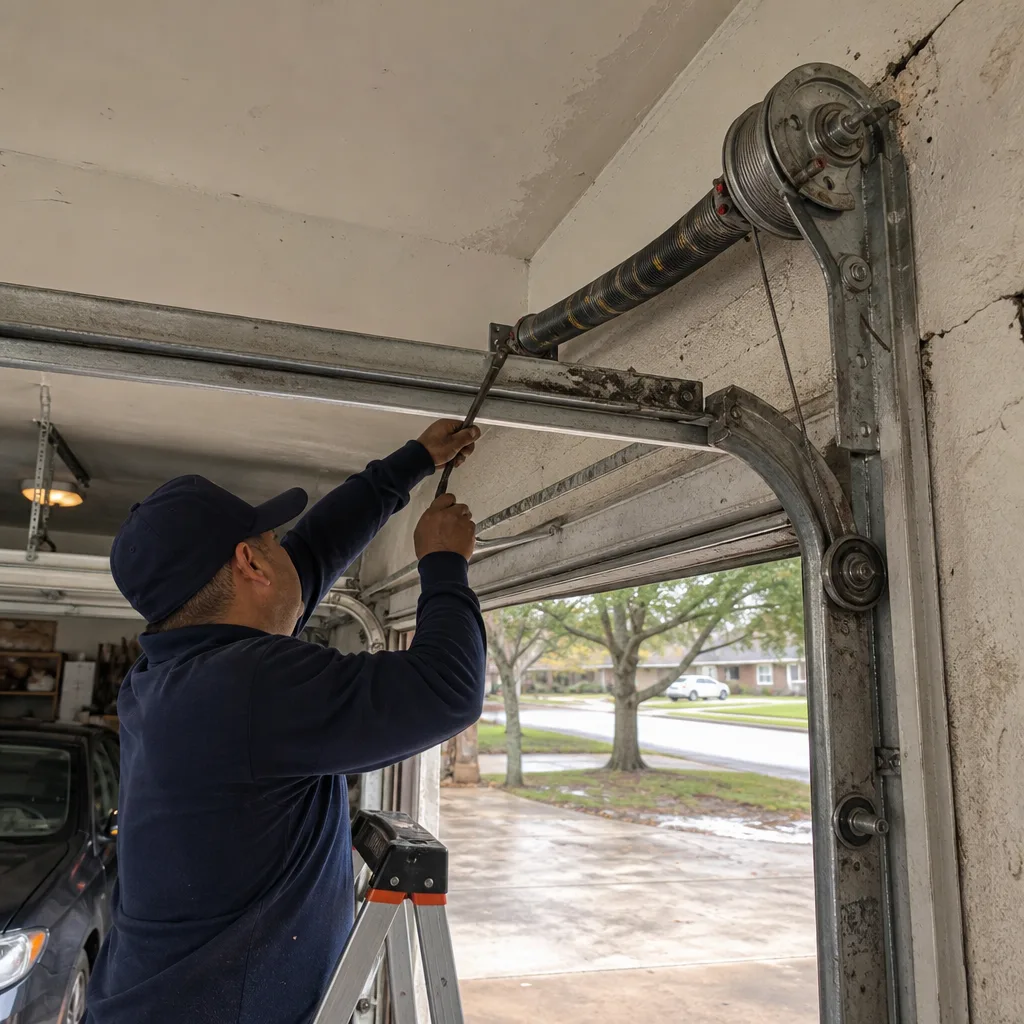
These are not the spring itself, but the braided steel cables that transfer the spring’s torque to the door. The braid traps humidity between strands. A cable that looks intact from the outside can have internal corrosion that reduces its strength by half. We replace cables with any broken outer strands, any kinking, or any sign of “bird-caging” where the braid has loosened. Do not attempt to replace these yourself. The torsion spring stores enough energy to cause serious injury or death if released incorrectly.
Hinge pins and roller stems
Standard steel hinges begin to seize after two to three years in an unconditioned Katy garage. Nylon rollers hold up better, but their stems are still steel and will rust. A seized hinge forces the opener to work harder and can twist the door panel. If you hear a rhythmic squeak that matches door travel, it is almost always a dry hinge.
Track mounting hardware
The lag bolts that attach the vertical track to the jamb are rarely galvanized to the same standard as the track itself. We have found loose track brackets in homes throughout Grand Lakes and Cinco Ranch where the original installer used standard steel lags. The expansion and contraction of humid wood framing works them loose over time.
What to look for: any rust-colored streak below a hardware point, any bolt head that has backed out more than a quarter-turn, and any bracket that moves when you push the door manually.
The 20-Minute Check You Can Do Yourself
This checklist requires no tools beyond a flashlight and a rag. Do it in daylight with the garage door closed and the opener disconnected.
- Visual sweep of all hardware - Start at the bottom left corner and work clockwise. Check each hinge, roller, bracket, and cable attachment for rust, cracks, or looseness. Wipe any grease drips or debris accumulation from the track interior. The track should be clean metal, not coated in old lubricant.
- Seal inspection - Run your hand along the bottom seal and the stop molding on the sides and top. The bottom seal should be flexible and continuous. If it cracks when you pinch it, UV has degraded the rubber. In Katy, this typically happens at 3-4 years, sooner if the door faces west. Side seals rarely fail but can pull away from the jamb in humidity-swollen wood.
- Balance test - Disconnect the opener per the next section. Lift the door manually to waist height and release. A properly balanced door should stay put or drift slowly. If it falls closed or shoots upward, the spring tension is wrong. Note the result but do not adjust springs yourself.
- Reversal sensor test - With the opener reconnected, start the door closing and wave a broom handle through the beam. The door must reverse immediately. If it pauses or continues, the sensors are misaligned or dirty. Clean the lenses with a dry cloth first; if that fails, the brackets may have shifted.
- Manual release check - Pull the red release cord and verify you can move the door smoothly by hand. It should not bind, grate, or require excessive force. Re-engage the opener according to your manufacturer’s procedure; for most LiftMaster and Chamberlain units, this means pulling the cord toward the motor unit until it clicks.
- Listen test - Run the door through a full cycle and listen. Grinding suggests track or roller wear. Rattling suggests loose hardware. A loud bang on startup often indicates a failing spring. Intermittent squeaks are usually hinges.
Record your findings. The log section below explains why this matters for warranty tracking.
How to Test Balance, Reversal Sensors, and Manual Release
These three tests are where homeowners most often create new problems while trying to diagnose old ones. Here is how to do each without causing damage.
Balance test - the safe method
Close the door fully. Pull the emergency release cord straight down, not at an angle. The release mechanism is designed for vertical pull; angling it can bend the actuation lever and cause the opener to disengage unexpectedly later. With the door disconnected, place both hands on the handle and lift smoothly. Do not jerk or let the door free-fall. The door should feel light through the first half of travel, then gradually heavier as the spring’s assist decreases. At waist height, release smoothly. A door that crashes down has a broken or poorly adjusted spring. A door that rises on its own is over-sprung, which strains the opener and can pull the door off the tracks in high wind.
What to record: Does the door stay at waist height? Does it drift? Does either side lead the other? Side-to-side unevenness indicates a failing cable or misaligned spring.
Reversal sensor test - what the code requires
Since 1993, federal law has required automatic reversal on contact and photoelectric sensors near the floor. The contact reversal is harder to test safely; the sensor test is straightforward. With the door closing, interrupt the beam with an object at least six inches tall. The door must reverse within two seconds. If it does not, check alignment first. The sender and receiver LEDs should both glow steady; a blinking LED means misalignment. In Katy garages with direct west exposure, afternoon sun can blind the receiver. If reversal fails only at certain times of day, sun interference is likely. We can install sun shields for this.
Manual release - re-engagement is the critical step
Most homeowners pull the release successfully. Many fail to re-engage properly. On chain-drive openers, the trolley must be aligned with the bullet or latch position before the cord will re-engage. If you force it, you can strip the nylon drive gear inside the opener. Run the opener to the closed position with the door disconnected, then pull the cord toward the motor unit at the correct angle. If you are uncertain, consult your owner’s manual or call us. A door that runs from the opener but does not move the door has been improperly re-engaged.
We are factory-familiar with all major brands including Wayne Dalton, Craftsman, and Raynor, and we can walk you through this over the phone if needed. Our phones are staffed by a live person, 24/7, including nights and holidays.
What You Can Do vs. What Requires a Licensed Hand
The line between safe homeowner maintenance and professional repair is not about skill. It is about stored energy and the potential for sudden, uncontrolled release. We have seen capable homeowners injured by components they did not realize were dangerous.
Safe for any homeowner:
- Visual inspection of all hardware and seals
- Lubrication of hinges, rollers, and the torsion spring with silicone-based product
- Sensor cleaning and alignment verification
- Track cleaning and debris removal
- Testing and recording of balance and reversal function
- Weatherstripping replacement on side and top stops
Requires a trained technician:
- Torsion spring adjustment or replacement - high-tension, lethal if mishandled
- Lift cable replacement - stored energy in the spring transfers to cables during service
- Bottom bracket replacement - these are under spring tension even when the door is closed
- Track realignment or replacement - improper geometry causes binding and opener damage
- Opener motor gear repair - electrical and mechanical integration
- Wind-load reinforcement installation - structural attachment to framing
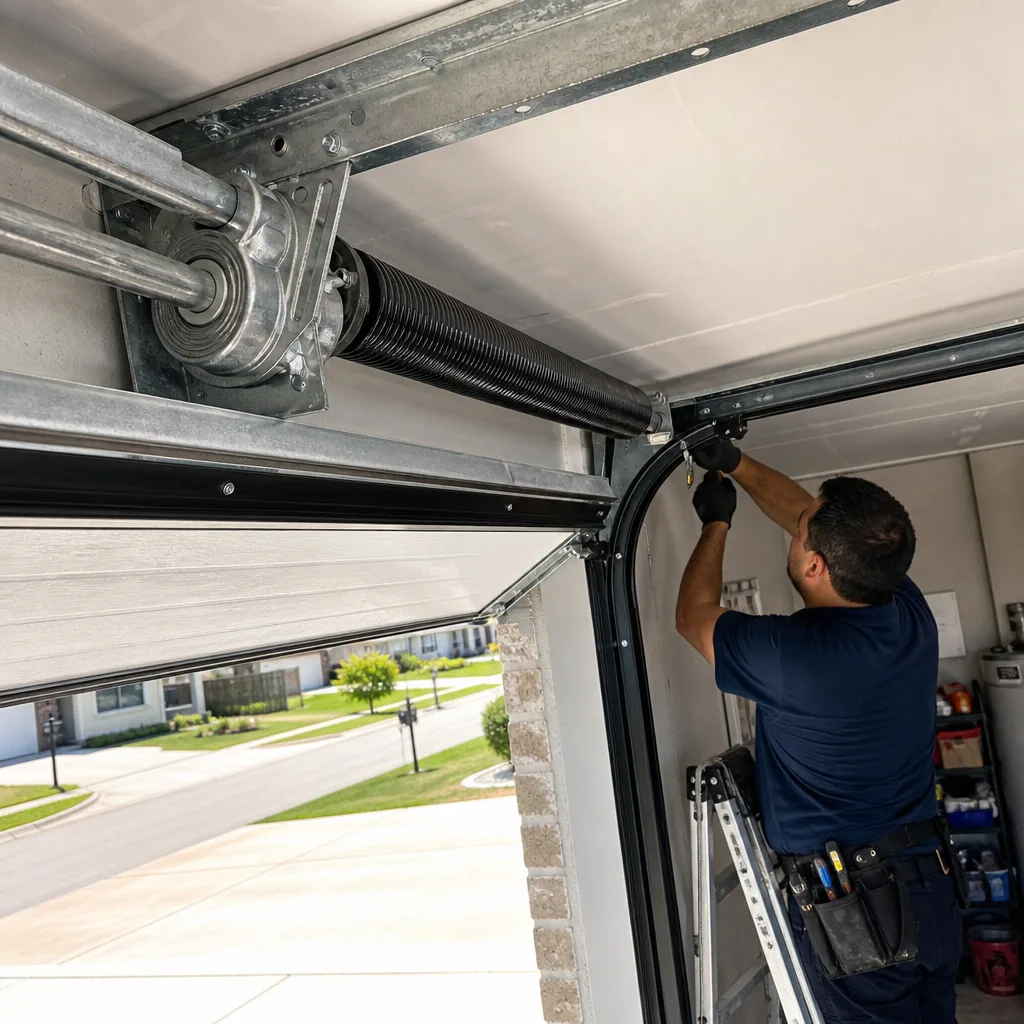
We do not provide step-by-step instructions for the professional items. The risk is genuine and not theoretical. A torsion spring for a standard 16-foot door stores roughly 10,000 foot-pounds of torque. The winding bars used to adjust it must fit precisely; the wrong bar can slip and cause severe injury. Our technicians are trained as journeymen under our K.E.Y.S. values code, and this is the work they are equipped to handle. If you need help choosing a provider, read How to Hire a Garage Door Contractor in Katy: A Step-by-Step Guide.
What we do provide is clarity. When you call Mainspring Garage Door Co. home, we state the flat price before any work begins. No surprises on the bill. If the work is not done right, we come back at no charge. That promise is in writing on every job.
A Printable Log for Tracking Service and Warranties
Most garage door components carry manufacturer warranties that require proof of maintenance. A LiftMaster opener motor may carry a lifetime warranty, but only if the unit has been serviced according to schedule. A Clopay or Amarr door panel warranty may be voided if corrosion results from neglected seal replacement. Without records, you have no leverage.
Here is the log format we recommend. Keep it taped inside the entry door to your garage, or in a file with your home records:
GARAGE DOOR SERVICE LOG - [Address]
Door Information
- Brand/Model: _________________
- Size: _________________
- Installation Date: _________________
- Installer: _________________
Opener Information
- Brand/Model: _________________
- Horsepower: _________________
- Installation Date: _________________
Spring Information
- Type (torsion/extension): _________________
- Size/Wire gauge: _________________
- Last replaced: _________________
- Installed by: _________________
Inspection Record
| Date | Inspector | Balance | Reversal | Seals | Hardware | Notes |
|---|---|---|---|---|---|---|
| __/__/____ | Self/Pro | Pass/Fail | Pass/Fail | Good/Fair/Poor | Good/Fair/Poor | _________________ |
| __/__/____ | Self/Pro | Pass/Fail | Pass/Fail | Good/Fair/Poor | Good/Fair/Poor | _________________ |
Service History
| Date | Provider | Work Performed | Parts Replaced | Cost | Warranty Expires |
|---|---|---|---|---|---|
| __/__/____ | _______________ | _______________ | _______________ | $_______ | __/__/____ |
This log serves two purposes. It protects your warranty claims, and it gives any future technician immediate context. When we arrive at a Katy home and see a maintenance history, we can diagnose faster and quote more precisely. The homeowner in Seven Meadows who tracked her spring replacement date saved 45 minutes of diagnostic time on a follow-up call last year.
Common Mistakes to Avoid
- Using WD-40 on garage door components - WD-40 is a solvent and water displacer, not a lubricant. In Katy’s humidity, it evaporates and leaves a sticky residue that collects dust and accelerates wear. Use silicone-based spray or white lithium grease.
- Ignoring a slow-opening door - A door that takes noticeably longer to open is not “just getting old.” The opener is compensating for a failing spring or binding track. Continuing to operate it burns out the motor. We see this most in Grand Lakes, where homeowners attribute the change to opener age rather than mechanical resistance.
- Testing reversal with a body part - Never use your hand or foot to test contact reversal. Use a solid object like a 2×4 laid flat. The force required to trigger reversal on older openers can cause injury.
- Replacing only one spring on a two-spring door - The new spring has different tension characteristics than the aged spring. The door will run unevenly, and the old spring will fail soon after. We always replace torsion springs in matched pairs.
- Neglecting the emergency release - Many Katy homeowners have never pulled the red cord. In a power outage or opener failure, they discover it is seized or they do not know how to re-engage. Test it twice a year.
- Assuming all openers reverse the same way - Chain-drive, belt-drive, and screw-drive units have different force settings and test procedures. Consult your specific manual. Our technicians are factory-familiar with all major brands including Raynor and Craftsman if you need guidance.
- Waiting for total failure - A cable with one broken strand will fail completely, often at the worst moment. A seal that is cracking will admit water and accelerate hardware corrosion. Preventive maintenance costs less than emergency repair, and it avoids the inconvenience of a door that will not open when you need to leave for work.
When to Call a Professional
Call a technician when you find any of the following during your inspection: a door that fails the balance test, any damage to lift cables or torsion springs, misaligned or damaged tracks, an opener that reverses inconsistently, or any hardware point that moves when it should not. These conditions worsen quickly in Katy’s climate, and operating a compromised door risks injury and additional damage.
Carl Dutton and the team at Mainspring Garage Door Co. have served Katy since 2016, building on 42 years of company history in this region. We offer free estimates, and our trucks carry springs, cables, and openers so most jobs are completed in a single visit. If you are uncertain what you found during your inspection, call (281) 205-0555. A live person answers, 24/7, and we will tell you straight whether you need a visit or just a better flashlight angle.
Frequently Asked Questions
Twice a year, in March and October, to align with our severe weather seasons and humidity cycles. March catches winter wear before spring storms; October catches summer UV damage before the cool season reduces door cycling. If your garage is unconditioned or faces direct afternoon sun, add a quick visual check in July.
A professional seasonal tune-up from Mainspring Garage Door Co. is $89. This includes balance adjustment, hardware tightening, lubrication, sensor alignment, and a full safety inspection. Repairs found during the tune-up are quoted separately, with the flat price stated before any work begins. We also offer $50 off any repair over $250, a free second opinion on any written estimate, and a permanent 5% discount for seniors and veterans.
Yes, with caution. Apply silicone-based spray lightly along the spring coils from a safe distance; do not touch or attempt to move the spring. Never use your hand to distribute the lubricant. If the spring shows gaps between coils, rust pits, or any sign of deformation, stop and call a professional. That spring stores lethal energy.
In Katy, panel expansion from heat and humidity is the most common cause. Wood composite panels absorb moisture and swell against the tracks. Steel doors with poor-quality paint can also expand slightly. Check that the tracks are clean and properly spaced; if the door binds at the same point every cycle, panel expansion is likely. A technician can assess whether track adjustment or panel replacement is needed.
Standard torsion springs are rated for 10,000 cycles, which translates to 7-10 years for a typical residential door. Katy’s humidity can reduce this by accelerating corrosion at the spring endpoints where they contact the cones. We use galvanized or coated springs for this market when possible, and we always replace springs in matched pairs. Ask about cycle-life upgrades if your door sees heavy use.
No. At Mainspring Garage Door Co., the flat price is stated before any work begins. If our technician finds additional issues during the repair, we stop and quote the additional work separately. You approve every dollar before it is spent. This is how we have operated since 1984, and it is why we put the 90-Day Done Right Promise in writing on every job.
The Bottom Line
A garage door maintenance checklist for Katy is not a generic seasonal reminder. It is a climate-specific practice calibrated to humidity that corrodes cables, UV that cracks seals, and storms that test every attachment point. The 20-minute check in March and October, faithfully recorded, prevents the majority of emergency calls we receive. What you can do safely, do. What requires a trained hand, do not attempt. The line is clear, and respecting it keeps you safe and your door reliable.
Carl Dutton and our team have built Mainspring Garage Door Co. on the promise that the work will be done right, the price will be stated upfront, and we will be there when we say. If you would rather have a professional eye on your door, or if your inspection turned up anything uncertain, call (281) 205-0555 for a free estimate. A live person answers, day or night, and we will give you a square deal with no surprises on the bill.
Written by Carl Dutton, Owner at Mainspring Garage Door Co., serving Katy since 2016.